Credit Score Education
 Credit Reporting & Consumer Rights
 Personal Finance Tips
 Budgeting & Money Management
 Identity Theft & Fraud Prevention
 Credit Card Education
 Consumer Financial News
 Cost of Living & Inflation
 Banking & Savings Education
 Consumer Protection & Financial Literacy


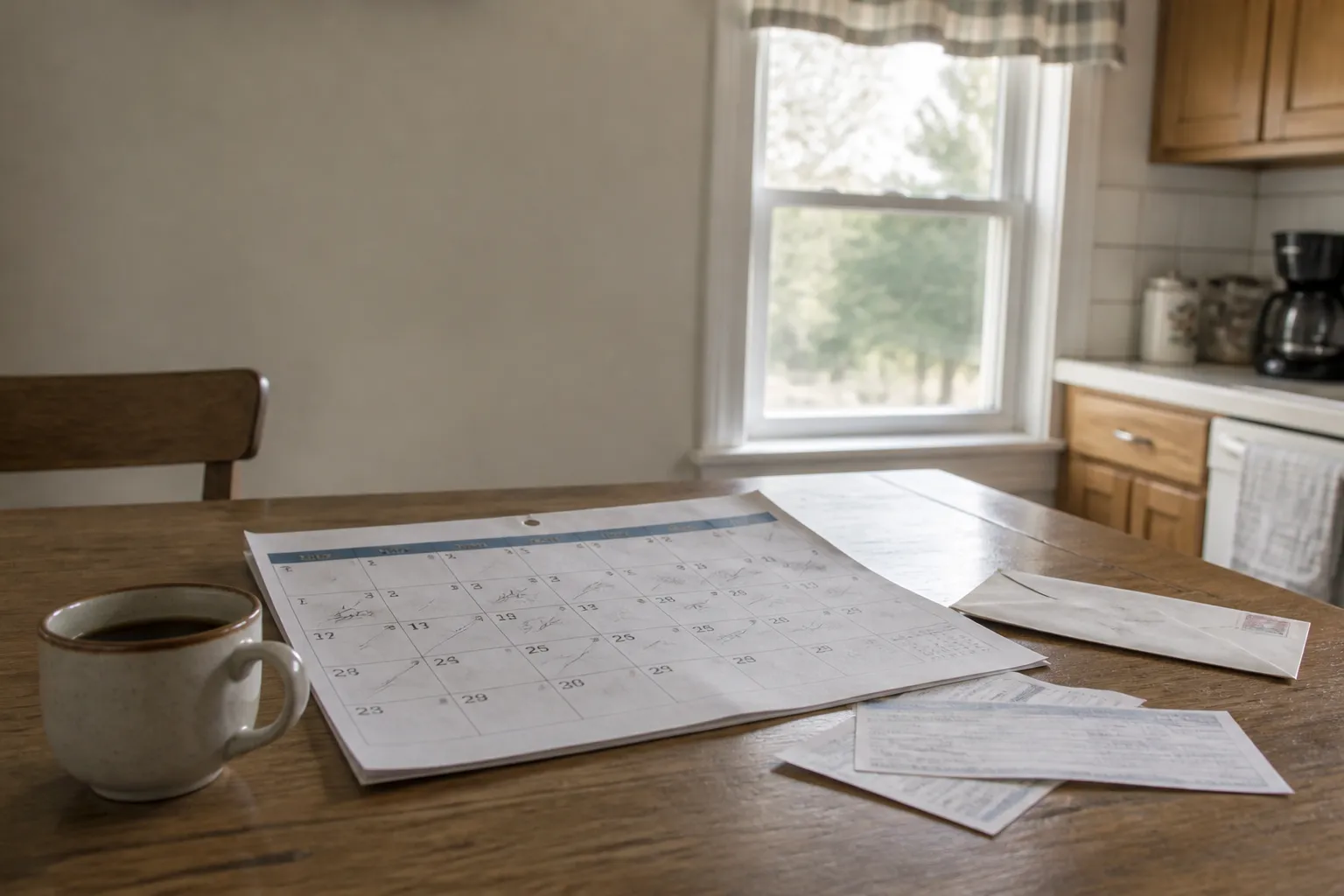
Picture a bill calendar. Rent is due on the 1st. The electric bill lands on the 18th. Pay arrives on no fixed schedule, and the amounts change. A strong stretch makes the page look calm. A lean one shows a gap between the day money comes in and the day a bill is due.
Why a cash reserve matters when pay varies
The Consumer Financial Protection Bureau defines an emergency fund as money set aside for unplanned expenses or financial emergencies. Its examples include car repairs, home repairs, medical bills and a loss of income. The CFPB also says emergency savings can cover large or small costs that are not part of routine monthly spending. Its guidance is in the CFPB guide to building an emergency fund.
Variable pay adds a timing problem. A bill can come due before a deposit arrives, or a deposit can come in smaller than expected. A reserve may help absorb a surprise without forcing a choice between that cost and another essential bill. The CFPB says that putting aside even a small amount for unplanned expenses can help a person recover faster and get back to larger savings goals.
Here is a distinction worth making. If your pay normally rises and falls, a low month may be part of the pattern. That is editorial judgment, not CFPB guidance. Treating each lean month as an emergency could drain the money meant for a real surprise, like a broken transmission.
Start with the calendar, then sort the money
Put expected deposits and due dates on one calendar. This is an organizing exercise of our own, not a method from the CFPB. The goal is to see where bills cluster ahead of income. Estimates stay estimates, so write them in pencil.
Here is a made-up example, for illustration only. Say rent of $900 is due on the 1st, a $120 utility bill on the 18th, and a $60 phone bill on the 25th. Deposits of about $700 usually arrive around the 10th and about $900 near the 28th, but either can slip or shrink. The calendar shows the problem at once: the 1st comes before any money has landed, and the 18th may depend on a deposit that could be late. Those two dates are the ones to plan around.
Next, sort the bills into two piles. Rent, the utility bill and the phone bill are routine, even when the dates are awkward. A surprise repair or medical bill fits the CFPB's description of an unplanned expense. A reserve is aimed at the second pile. The first pile needs a plan of its own.
Questions to ask yourself while you fill in the calendar:
- Which bills fall before my next likely deposit?
- Which deposit dates am I least sure about?
- Which costs repeat, and which would catch me off guard?
Make the first step small enough to repeat
The CFPB presents a dedicated savings or emergency fund as one of the first steps toward saving. Its message is that a small amount still helps. For someone with variable pay, that argues against waiting for a perfect month before starting.
In the example above, a strong month might leave a little extra after the 28th deposit. Moving $25 of it into a separate account is a start. In a tight month, the rent and utilities come first and the transfer can be skipped. Those amounts are invented, and the CFPB excerpt does not set a schedule or a fixed sum per pay period.
A separate fund gives the money a job. It is easier to see what is reserved for surprises and what is free for everyday spending. It also makes a lean month less tempting to patch by raiding the cushion.
What the reserve will not do, and where to look next
An emergency fund is not a full irregular-income budget. It does not tell you how to average your pay, pick a baseline for lean months or carry money from a good month into a thin one. The CFPB excerpt used here does not give a target balance or a number of months to save. It also does not say where to keep the money or when to spend it. Check the full guide for those answers rather than relying on a rule of thumb you have heard elsewhere.
Two CFPB toolkit PDFs, one on financial empowerment and one on income and benefits, could not be read for this article. Their contents are not reflected here. Taxes are also outside what these sources cover, including set-asides for self-employed or gig income. For tax questions, use official tax agency information or a qualified professional. The CFPB and FTC publish other consumer resources worth browsing.
The calendar and the reserve work as a pair. The calendar shows when the squeeze will hit. The reserve is there for the costs no calendar could predict. Start with the two dates that worry you most. This article is educational and is not personal financial, legal or tax advice.
Please seek a professional. This article is general information, not financial, tax or insurance advice. Please seek a licensed financial, tax or insurance professional about your own situation.