 Credit Score Education
 Credit Reporting & Consumer Rights
 Personal Finance Tips
 Budgeting & Money Management
 Identity Theft & Fraud Prevention
 Credit Card Education
 Consumer Financial News
 Cost of Living & Inflation
 Banking & Savings Education
 Consumer Protection & Financial Literacy

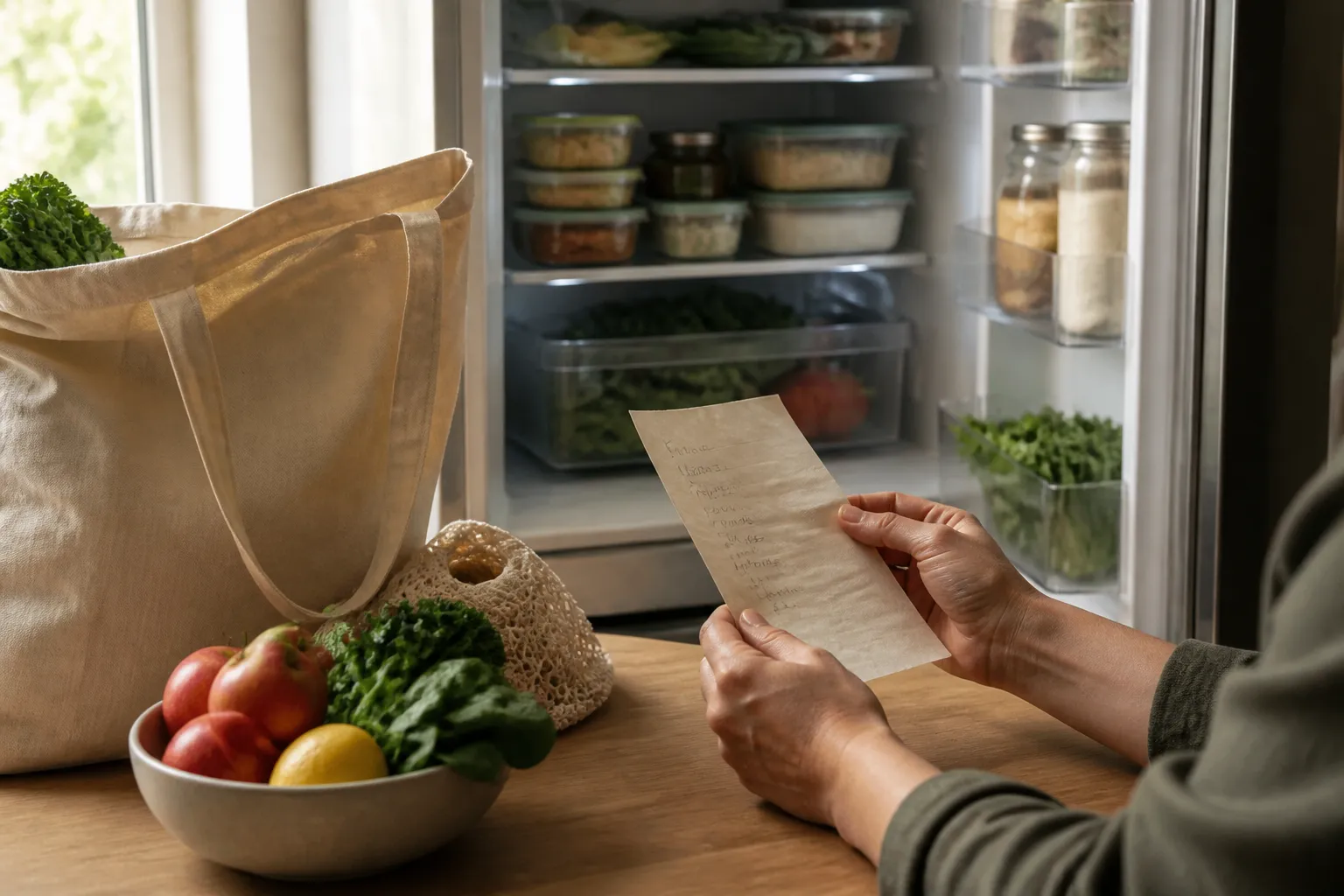
Picture a normal Tuesday: dinner plans change, a bag of salad slides behind the leftovers, and a second jar of something appears in the pantry because nobody checked before shopping. None of those moments looks expensive on its own. Over a month, they can turn a grocery bill into a stack of food that never gets used. Cutting that waste does not have to mean changing every meal or giving up foods your household enjoys. It can start with a short routine tied to the day you shop.
Food waste belongs in the grocery budget
A grocery purchase is only a good value if the food gets eaten. The EPA estimates that an average family of four spends nearly $3,000 a year on food that is not eaten, and says reducing waste could save that household up to $56 a week. Those figures are broad estimates, not a prediction for any one family. Still, they give a useful prompt: look at what regularly reaches the trash, compost bin, or back of the freezer.
The national numbers are large, too. Federal agencies estimate that roughly one-third of food in the United States goes uneaten. Food is also the largest category of material placed in municipal landfills. Wasting food can mean wasting the water, energy, labor, and transportation involved in getting it to the kitchen. For a household budget, the immediate issue is simpler: money left the checking account, but the planned meal never happened.
Try treating discarded food as a bill-calendar clue. If trash day is Thursday, take two minutes Wednesday night to notice what is being thrown out. A wilted herb bundle may point to oversized shopping trips. Repeated restaurant leftovers may suggest ordering more than the household can finish. The goal is not to judge the purchase. It is to find one recurring mismatch between what gets bought and what actually gets used.
Build the grocery list around the week you really have
Planning works best when it fits the calendar rather than an ideal version of it. Before shopping, look at work shifts, school events, travel, and evenings when cooking is unlikely. Then list a realistic number of meals to make at home. A week with two late nights may call for two cooked dinners, one planned leftover night, and a few easy staples, not seven elaborate recipes.
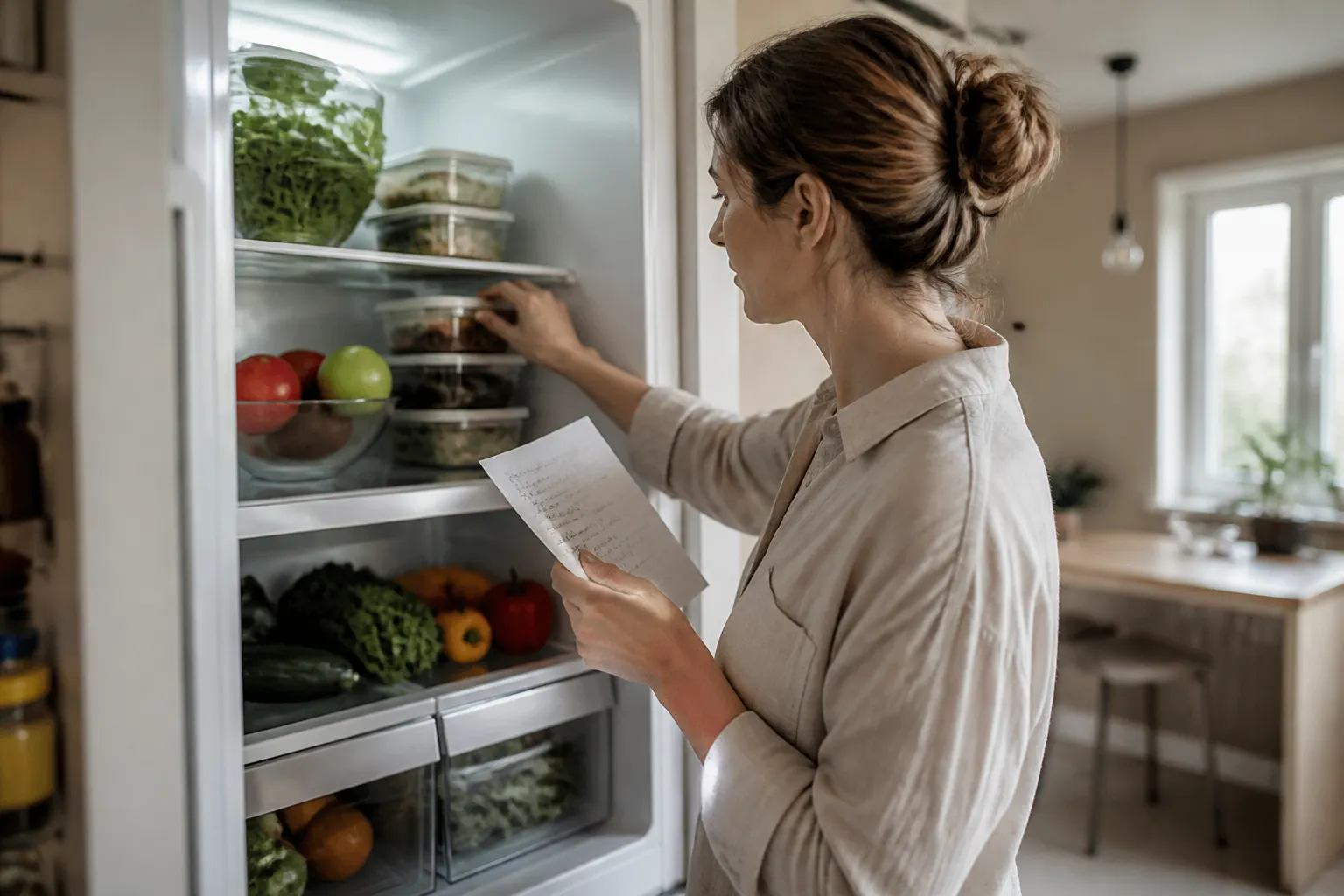
Next, check the refrigerator, freezer, and pantry before writing the list. This step helps catch duplicate purchases, but it also gives older food a job. If there is half a bag of frozen vegetables and a package of chicken already on hand, those items may become a meal plan before new ingredients are added. The FDA recommends planning meals, checking what is already available, and shopping from a list as practical ways to reduce food waste.
A useful list can include quantities, not just item names. Instead of writing “fruit,” write “four apples and one bunch of bananas” if that is closer to what the household usually finishes. Instead of buying ingredients for five lunches, plan for three if two days are often spent away from home. This is a tradeoff, not a rule about buying less at all costs. Buying enough for the actual week may be more helpful than buying for a schedule that rarely holds.
At the store, make exceptions on purpose
A list does not ban every change of plan. It creates a default. If a sale, display, or checkout item looks appealing, pause for one question: what meal or snack will use it, and when? If there is no clear answer, the lower price may not matter. An item that spoils before it is used can cost more than the full-price item that was already on the list.
Bulk packages deserve the same test. The unit price may be lower, but fresh produce, bread, dairy foods, and prepared items often have a short window for use. A bigger package may make sense when part can be frozen or when several planned meals use it. Otherwise, the smaller package can be the lower-cost choice for that week.
Cosmetically imperfect fruits and vegetables can be another option. The FDA notes that produce with surface blemishes may still be safe to eat, provided it is not spoiled. If those items are offered at a lower price and fit the meal plan, they may stretch a produce budget. Check the food itself, not just the discount sign.
Give food a visible place before it becomes a leftover
Storage is where a good shopping plan can either hold up or unravel. The FDA recommends keeping the refrigerator at 40°F or below and the freezer at 0°F. These temperatures matter for food safety, and they can also help households keep food usable for longer. The agency’s food-waste guidance links to storage resources for different foods.
Visibility matters almost as much as storage space. Put foods that need to be used soon near the front of a shelf. Keep newer items behind older ones. Label leftovers and freezer containers with the date, especially when several containers look alike. A container marked “chili, June 29” gives a clearer signal than an unmarked container that could be from any night.
Freezing can create breathing room for bread, cooked meals, and ingredients that will not be used before they decline. It is not a cure for buying far more than a household can use, but it can protect a planned purchase when the week changes. The FDA offers additional storage and food-safety information through its food waste and safety page.
Plan for leftovers and meals away from home
Leftovers work better when they are assigned a place on the calendar. A dinner cooked Monday can become Tuesday lunch, Wednesday’s quick dinner, or a frozen meal for a later busy night. Portioning food soon after the meal can help make that choice easier. One large container in the refrigerator may be forgotten. Several labeled lunch-size portions are harder to miss.
The same thinking applies to restaurant meals. If portions are likely to be large, asking for a smaller serving or a take-away box may help prevent paid-for food from becoming plate waste. Bringing food home only helps if it will be stored safely and eaten, so it can be useful to decide before ordering if there is room in the next day’s meal plan.
Food prices can change for reasons beyond any household’s control. USDA’s Food Price Outlook and the Bureau of Labor Statistics Consumer Price Index provide official context on grocery and restaurant price trends. Reducing waste may not erase a price increase, but it can help more of a grocery purchase reach the table.
Use one small review before the next trip
A full budget overhaul is not required. Before the next grocery run, review three things: what was thrown away, what ran out too soon, and what was bought twice. Then change one part of the next list. That could mean skipping a bulk package, planning one leftover dinner, or moving a freezer item onto the menu.
The EPA’s guidance on preventing wasted food at home offers more household-level ideas. For most people, the useful starting point is modest: buy for the real week, make older food visible, and give leftovers a date and a destination. Those steps can make the grocery bill feel less like a mystery without requiring a different way of eating.
Please seek a professional. This article is general information, not financial, tax or insurance advice. Please seek a licensed financial, tax or insurance professional about your own situation.