 Credit Score Education
 Credit Reporting & Consumer Rights
 Personal Finance Tips
 Budgeting & Money Management
 Identity Theft & Fraud Prevention
 Credit Card Education
 Consumer Financial News
 Cost of Living & Inflation
 Banking & Savings Education
 Consumer Protection & Financial Literacy

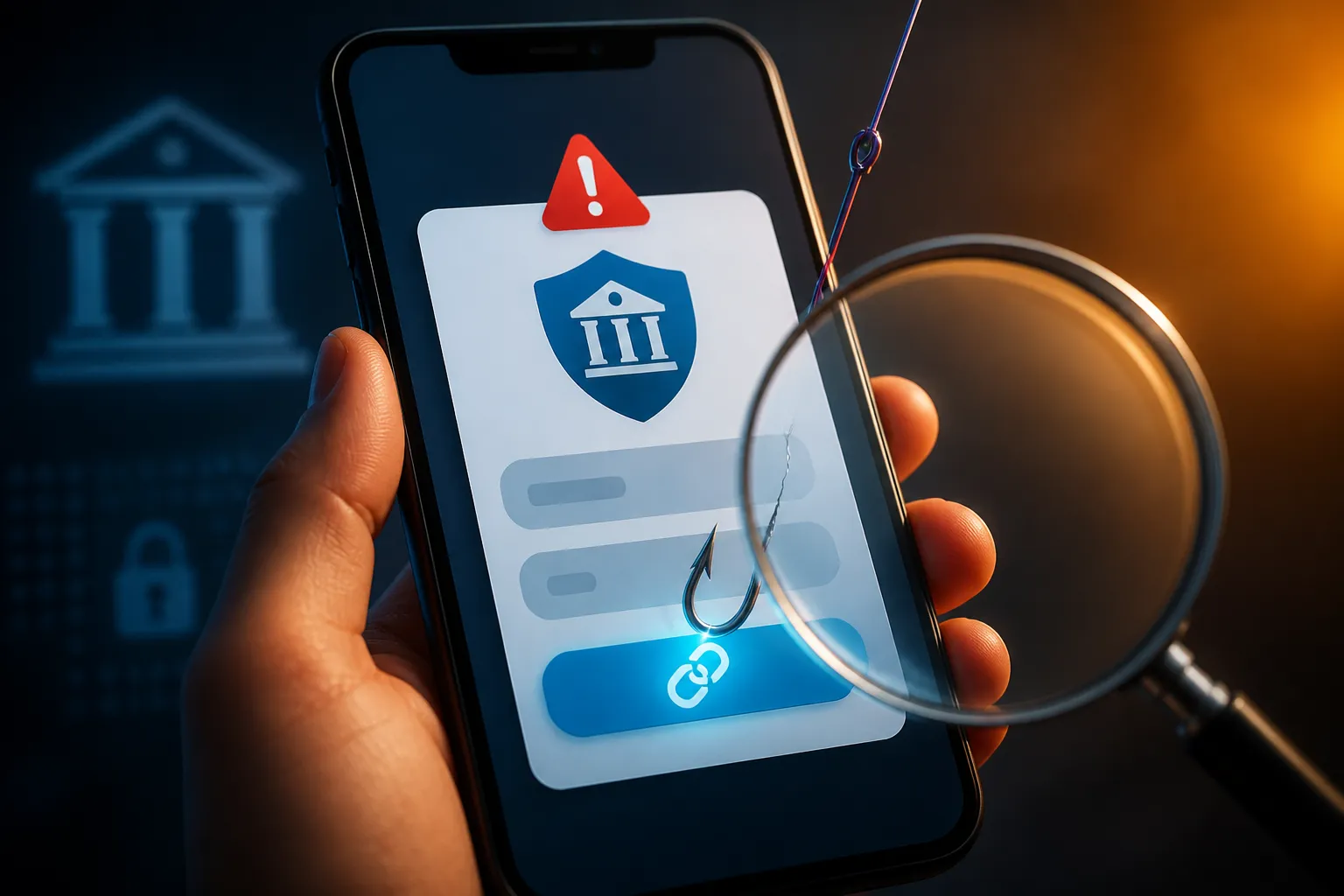
A sudden text alert pops up on a smartphone screen, displaying a recognized bank name alongside a quick notification about a pending transfer or locked account. For many consumers, the message carries enough familiar formatting, numbers, and logos to seem real at first glance. Clicking the enclosed link or responding directly can expose online credentials to an unauthorized party before the recipient has time to verify the request.
What a Bank Impersonation Scam Is
Bank impersonation scams belong to a broad category known as imposter scams, where bad actors pose as trusted institutions to persuade individuals to hand over personal or financial information. In a typical scenario described by the Bank Policy Institute, an industry advocacy group, a consumer receives a text message that appears to originate from their financial institution's fraud department. The text often displays the bank's name, phone number, and official branding alongside a link that directs the reader to act.
These schemes succeed largely because they copy routine security notifications. When a message mirrors the wording and visual design of a legitimate alert, a consumer can easily mistake a fraudulent warning for a routine administrative update. Because the scammer borrows the authority of a trusted bank, the recipient may not pause to question the context. A person often realizes the interaction was fraudulent only after unauthorized account activity has already taken place, making early recognition an essential line of defense.
How the Scam Unfolds
The progression of a bank impersonation scam generally follows three distinct stages: initial contact, artificial pressure, and unauthorized access. Contact can occur across several digital communication channels. Scammers send text messages, place phone calls using spoofed caller ID details, or send fraudulent emails. According to research from the Bank Policy Institute, scammers also establish fake websites, publish deceptive digital advertisements, and create phony profiles or email addresses that mimic actual corporate executives.
Once initial contact is made, the primary tool employed by fraudsters is psychological pressure. The incoming message or caller creates false urgency by claiming that a bank account will be frozen immediately or that an unauthorized transaction is currently pending. This manufactured panic aims to force a quick decision before the individual can double-check the claim through independent channels. Industry notes suggest artificial intelligence tools may also make these outreach attempts more tailored to individual targets and allow scams to operate across broader networks, though this reflects industry perspective on emerging technology.
The final phase occurs when the victim acts on the false premise. Clicking an included link can lead to a deceptive web page engineered to harvest passwords, PINs, or security codes. Alternatively, a caller posing as a fraud specialist might request verification codes or account details directly. Once those credentials are surrendered, criminals can move funds or alter security settings before the account owner recognizes the breach.
The Scale of Imposter Fraud
The economic impact of imposter schemes across the United States is substantial. Data published by the Federal Trade Commission indicates that consumers reported losing $3.5 billion to imposter scams in 2025. While this overall figure covers a wide range of imposter tactics beyond bank spoofing alone, it highlights the heavy financial toll inflicted by bad actors posing as familiar organizations.
Internal metrics from financial organizations reflect a similar pattern. In a survey conducted by the Bank Policy Institute among its member institutions, participating banks reported an average of 26,196 identified bank impersonation incidents in 2025. That represents a 150 percent increase in average identified incidents per bank compared to the prior year. Member banks surveyed placed bank impersonation as the second-highest scam type by volume. Because these statistics originate from an industry trade group with its own policy objectives, they are best understood as directional indicators of broader fraud trends rather than precise government counts. Still, the data demonstrates why financial institutions and regulators treat impersonation attacks as a primary security threat.
Warning Signs and Verification Habits
Developing simple verification habits helps guard against fake bank communications. The most consistent warning sign is an unsolicited text or email containing a direct link to resolve an alleged security problem. Even if the text appears in an existing thread or shows a recognized phone number, clicking links in unexpected alerts creates unnecessary risk. The safer practice is to ignore links in incoming messages and navigate directly to your bank's official mobile application or online portal, or to call the phone number printed on the back of your debit card.
High-pressure tactics are another major sign of a potential scam. Legitimate financial institutions provide options to review charges and rarely require immediate compliance within seconds or minutes under threat of account termination. When an incoming message demands instant action, taking a deliberate pause breaks the script that fraudsters rely upon to manipulate targets.
Industry and regulatory groups frequently publish updates to help consumers spot red flags. The American Bankers Association launched a consumer education campaign titled "Banks Never Ask That" to highlight standard security boundaries that financial institutions respect. Federal regulators also maintain public reference materials; consumers can review consumer guidance provided by the Federal Deposit Insurance Corporation and resources from the Office of the Comptroller of the Currency to learn more about identifying imposter communications and staying safe.
Please seek a professional. This article is general information, not financial, tax or insurance advice. Please seek a licensed financial, tax or insurance professional about your own situation.


