 Credit Score Education
 Credit Reporting & Consumer Rights
 Personal Finance Tips
 Budgeting & Money Management
 Identity Theft & Fraud Prevention
 Credit Card Education
 Consumer Financial News
 Cost of Living & Inflation
 Banking & Savings Education
 Consumer Protection & Financial Literacy

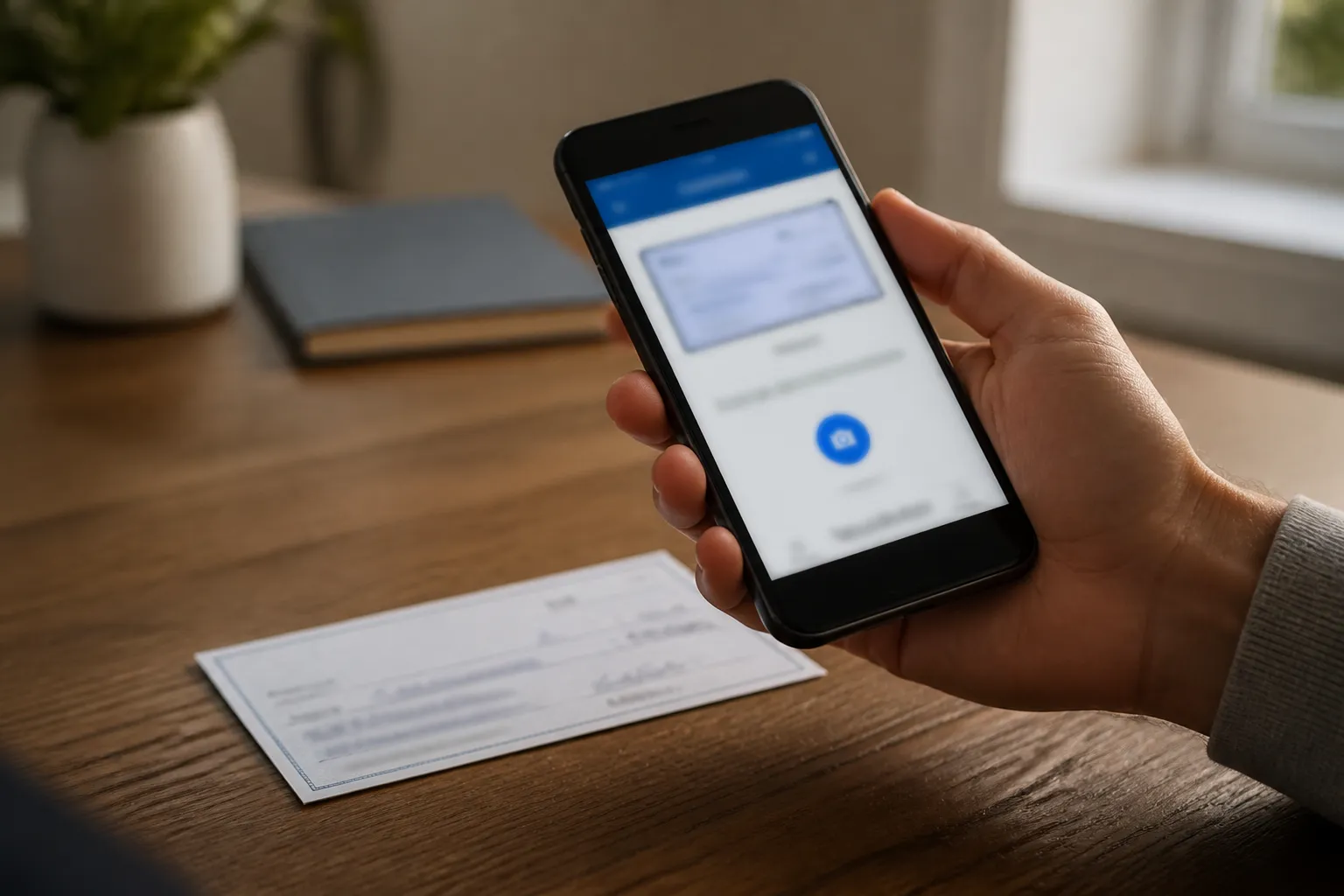
A mobile check deposit starts with your phone. You open your bank's app, photograph the front and back of a paper check, and send the images in. You skip the teller line and the ATM. You do not skip the rest of the process. The check still gets verified and cleared like any other.
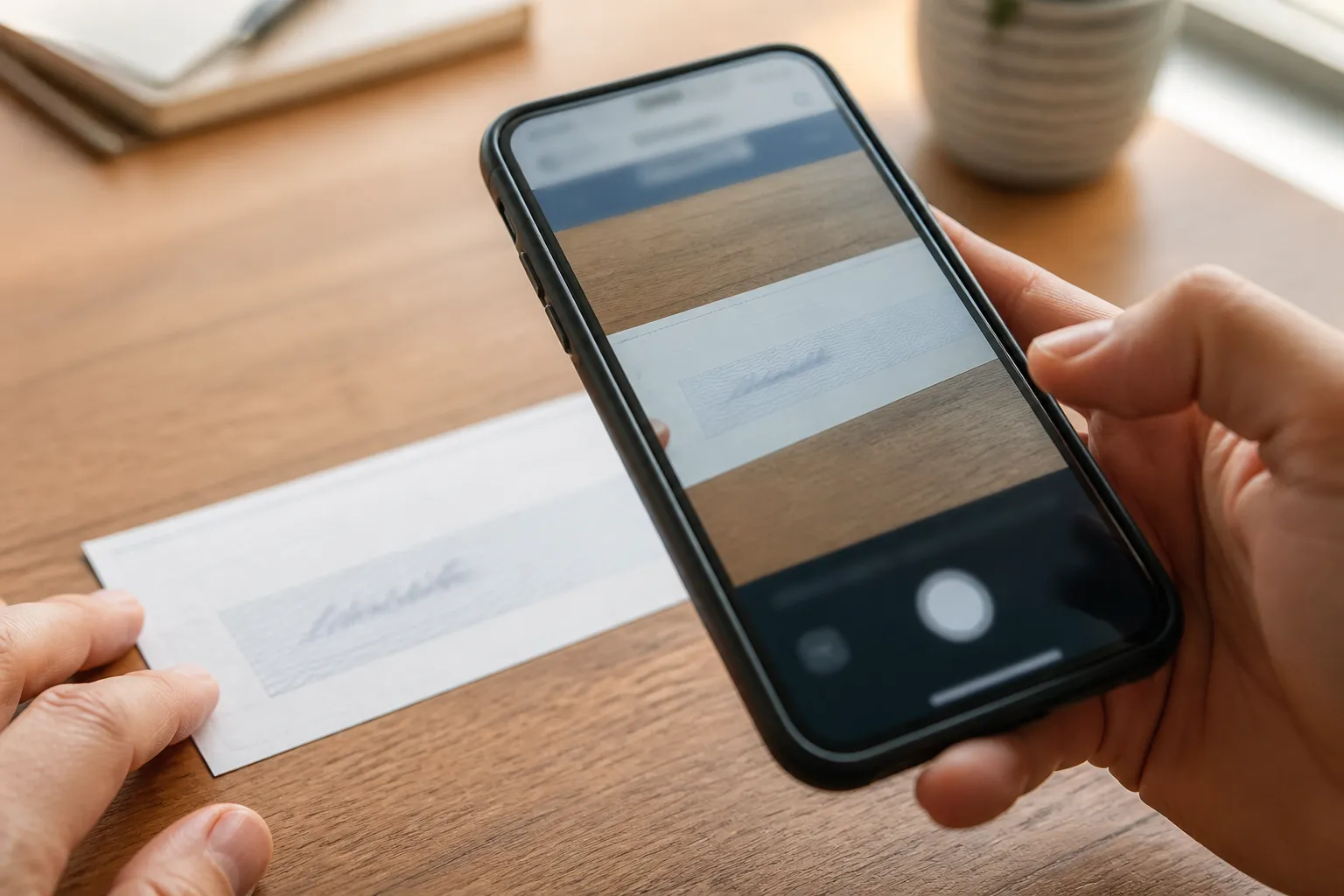
What happens after you tap submit
The app speeds up the start of the process. It does not bypass verification, clearing, or settlement. The industry source we relied on describes mobile deposit as moving through the same banking system as an in-person check deposit. After you submit, automated validations review the deposit before funds are released. How those reviews work inside any one bank varies, and the sources do not spell it out.
A confirmation screen means the bank received your images. It does not mean the money is yours to spend. If the check turns out to be uncollectible, the deposit can still fail later. Treat the pending balance as pending.
Endorsing the back of the check
Endorsement comes first. The back of the check must be signed by the account holder or payee. Some banks also ask you to check a box or write wording such as "For mobile deposit only." Rules differ, so look at your bank's instructions before you pick up the pen.
The endorsement does two jobs. It confirms that the account holder approves the transfer. It also helps prevent the same check from being submitted through more than one channel. If you deposit a check by phone, do not take it to a branch or ATM as well.
Holds, cut-off times, and when you can spend the money
Your bank or credit union may have a different hold timetable for mobile deposits than for in-person ones. The Consumer Financial Protection Bureau tells people to ask about the bank's policy. Do that before you count on fast access to the money.
The CFPB says certain deposits generally must be made available by the next business day. That includes cash and in-person checks of $225 or less. The page does not say how this applies to mobile deposits, so ask your bank.
Cut-off times matter too. According to the CFPB, a bank's cut-off for same-day treatment can be no earlier than 2:00 p.m. at physical locations and no earlier than noon at an ATM or elsewhere. A deposit made after the cut-off can be treated as made the next business day. If you usually deposit in the evening, your money may start its clock a day late.
Banks may also hold a deposit longer than one business day. The CFPB lists these reasons:
- The account has been open less than 30 days.
- The account was overdrawn too many times in the last six months.
- The bank thinks the check may be uncollectible.
- The bank suspects fraud.
Questions to ask your bank, and red flags
A short call or a look at your account agreement can save you a surprise. Ask these four questions:
- How long does my bank hold mobile check deposits, and is that different from in-person deposits?
- What is the cut-off time for mobile deposits?
- Does the bank require a specific endorsement, such as "For mobile deposit only"?
- What steps happen after I tap submit, and when will funds be available?
Watch for scams as well. The CFPB advises using your bank's website, or the number on a paper statement or card, when setting up online or mobile banking. Do not use links in an email or text, even if they claim to lead to your bank. Be wary of any deposit offer that promises the funds will skip verification or clearing. The process still requires those steps.
What to do with the paper check
None of our sources say how long to keep the paper check after a mobile deposit, or when to destroy it. So there is no official number to quote here. A cautious approach is to hold onto the check until the deposit shows as available in your account, and to ask your bank whether it has its own retention rule. Keep the check somewhere secure in the meantime. It still carries your account details and your signature.
The sources also do not cover deposit limits, what to do if a deposit is rejected or returned, or how to photograph a check so the app accepts it. For those, your bank's deposit agreement and help pages are the place to look. If a deposit is delayed beyond the hold your bank gave you, contact the bank directly and ask for the reason in writing.
Please seek a professional. This article is general information, not financial, tax or insurance advice. Please seek a licensed financial, tax or insurance professional about your own situation.


