 Credit Score Education
 Credit Reporting & Consumer Rights
 Personal Finance Tips
 Budgeting & Money Management
 Identity Theft & Fraud Prevention
 Credit Card Education
 Consumer Financial News
 Cost of Living & Inflation
 Banking & Savings Education
 Consumer Protection & Financial Literacy


You swipe your debit card for a coffee. Your balance is a few dollars short. What happens next depends on choices you may have made years ago and forgotten. An overdraft happens when your account lacks the money for a payment and the bank or credit union pays it anyway. You then owe the shortfall plus any overdraft fee.
The Consumer Financial Protection Bureau (CFPB) points to three options worth weighing:
- Opt out of debit and ATM coverage. Without coverage, a purchase or withdrawal that your balance cannot cover is generally declined, so no overdraft fee applies.
- Link checking to savings. If checking runs short, the bank pulls the difference from your savings account.
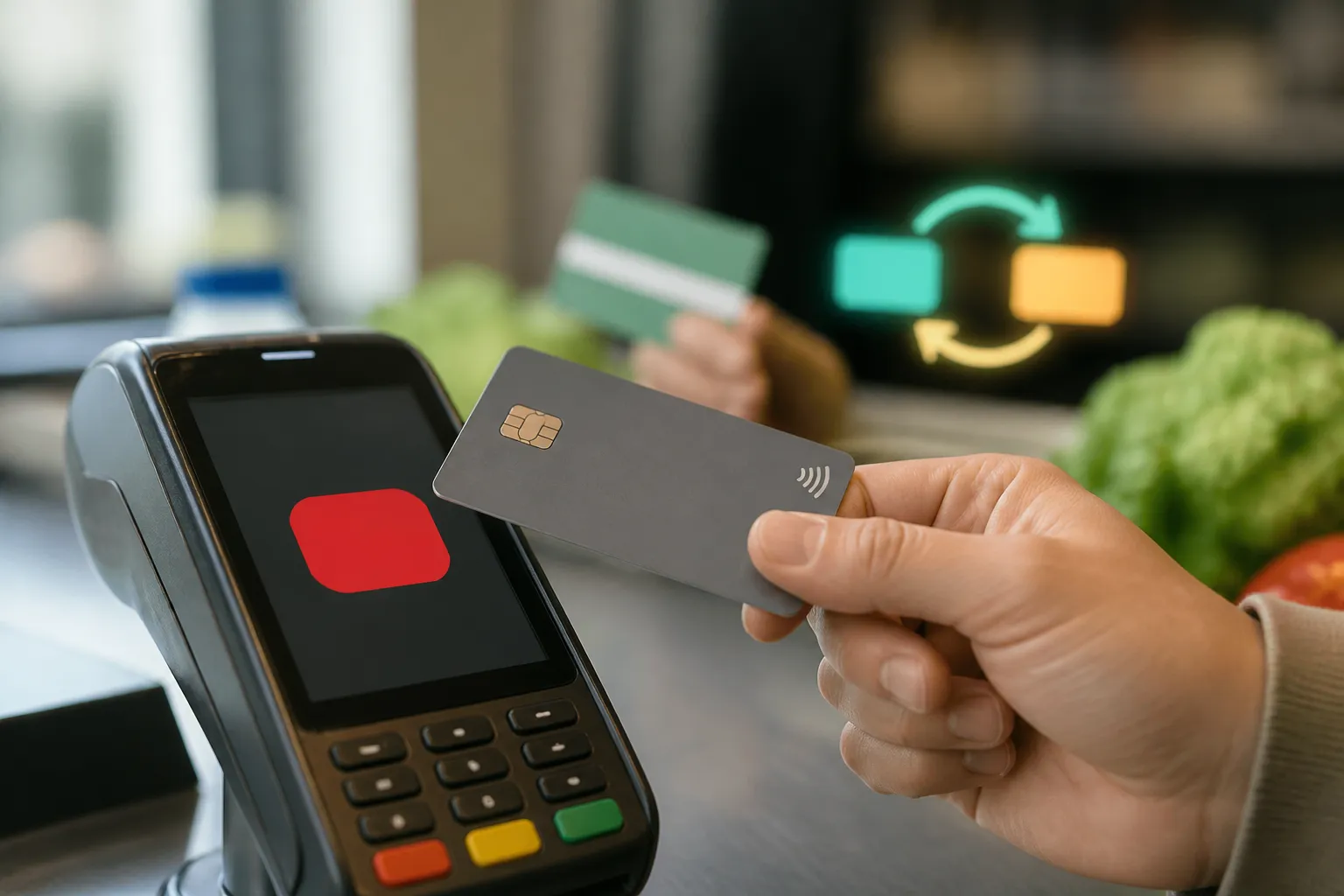
- Ask about a line of credit. Overdraft coverage may be tied to a credit card or credit line, and interest builds on whatever is borrowed.
What the Opt-In Rule Means for Debit Cards
Banks and credit unions cannot charge an overdraft fee on an ATM or point-of-sale debit transaction unless you opted in. That is the general rule described on the CFPB's consumer pages. The rule itself sits in Regulation E, section 1005.17, titled Requirements for overdraft services. The text we could retrieve showed only a table of contents, so this article leans on the CFPB's plain-language summaries instead.
You can also change your mind. The CFPB says customers may choose not to have debit overdraft coverage and can reverse that choice later. The exact steps were cut off in the source we reviewed, so ask your bank how it handles the change.
Coverage for checks and online bill payments is a separate kind that many banks and credit unions offer. Opting out of debit coverage does not necessarily settle how those payments are handled. Check your account agreement.
Comparing the Three Options Side by Side
Opting out is the simplest. If the money is not there, the card is declined. That can be embarrassing at a checkout line, but it costs nothing in overdraft fees. The trade-off is that you lose the safety net for a moment when you really need a purchase to go through.
A linked savings account works as a cushion. When checking goes negative, money moves over from savings. The CFPB says this usually carries a transfer fee, and that the fee is less than an overdraft fee. The weak spot is obvious. If savings is empty, the cushion is gone, and the sources do not say what every bank does in that case.
A line of credit covers the gap with borrowed money. The CFPB says it may carry a fee when you tap it, plus interest on the amount you borrow. For a brief cash shortfall, the CFPB says it can still cost less than overdraft fees. The sources do not explain how a credit line or a savings link might affect your credit reports or scores, so ask your bank before you apply.
The CFPB does not rank these options for any individual. It suggests that people who regularly pay overdraft fees look for ways to cut them.
A Worked Example With Made-Up Numbers
This is an illustration only. Real fees vary, so swap in the numbers from your own fee schedule.
Say your bank charges a $35 overdraft fee. You are $6 short on a grocery run and $4 short on a coffee the same day. With standard coverage and no other protection, that could be two fees, or $70, for $10 of shortfall. The CFPB has described nearly this exact case: a $4 coffee and a small pack of gum, each triggering a $35 fee, for $70 total. That example comes from a 2012 archived advisory, so treat it as a picture of how fees work, not as current pricing.
Now suppose a linked savings transfer costs $10 each time. Two transfers would cost $20. With opt-out, the two purchases are declined and the fee is $0. With a credit line, you might pay a draw fee plus a few cents of interest on $10 for a few days. The fee amounts here are invented. The pattern is what matters. A flat fee hurts most when the shortfall is small.
How Fees Stack Up
Overdraft fees are often a fixed amount no matter how small the purchase. The CFPB says many banks and credit unions charge $30 or more per transaction. Several fees can land in one day, although some institutions set a daily maximum.
There can be a second layer too. Many institutions charge an extended overdraft fee if the shortfall is not repaid within a few days. The CFPB also describes short-term overdraft cash advances as costly. A small mistake on Monday can still be growing on Friday.
Questions to Ask Your Bank
Your fee schedule and account agreement hold the real numbers. These questions can pull them out quickly:
- Is my account opted in for debit and ATM overdraft coverage, and can I change that?
- Am I eligible for a line of credit linked to overdraft coverage?
- What fee applies to a linked-savings transfer, a credit line draw, or a standard overdraft?
- Is there a daily maximum on overdraft fees?
- Is there an extended overdraft fee after a set number of days?
If you bank at a credit union, there is one timing detail that may help. MyCreditUnion.gov says credit unions must make direct-deposit funds available no later than the business day after they receive them electronically. You can read more on its checking accounts page.
What We Could Not Confirm
The FDIC has a chapter on overdraft payment programs in its compliance examination manual. The OCC issued Bulletin 2023-12 on April 26, 2023, about risk management for overdraft programs at national banks and federal savings associations. The text we could read for both was cut off, so we cannot say what they require.
The sources also do not give current average fees or a way to total up yearly costs for your spending pattern. Your own statements and fee schedule are the best place to start.
Please seek a professional. This article is general information, not financial, tax or insurance advice. Please seek a licensed financial, tax or insurance professional about your own situation.


