 Credit Score Education
 Credit Reporting & Consumer Rights
 Personal Finance Tips
 Budgeting & Money Management
 Identity Theft & Fraud Prevention
 Credit Card Education
 Consumer Financial News
 Cost of Living & Inflation
 Banking & Savings Education
 Consumer Protection & Financial Literacy


Most people never think about overdraft settings until a fee shows up. For debit cards and ATMs, federal rules say the default is no coverage. The bank or credit union cannot charge an overdraft fee on those transactions unless you said yes first.
In practice, that means a card swipe for groceries should be declined if your account lacks the money, and you pay nothing for the decline. Coverage only starts after you opt in. This article walks through what that choice covers, what it leaves out, and what to ask your bank.
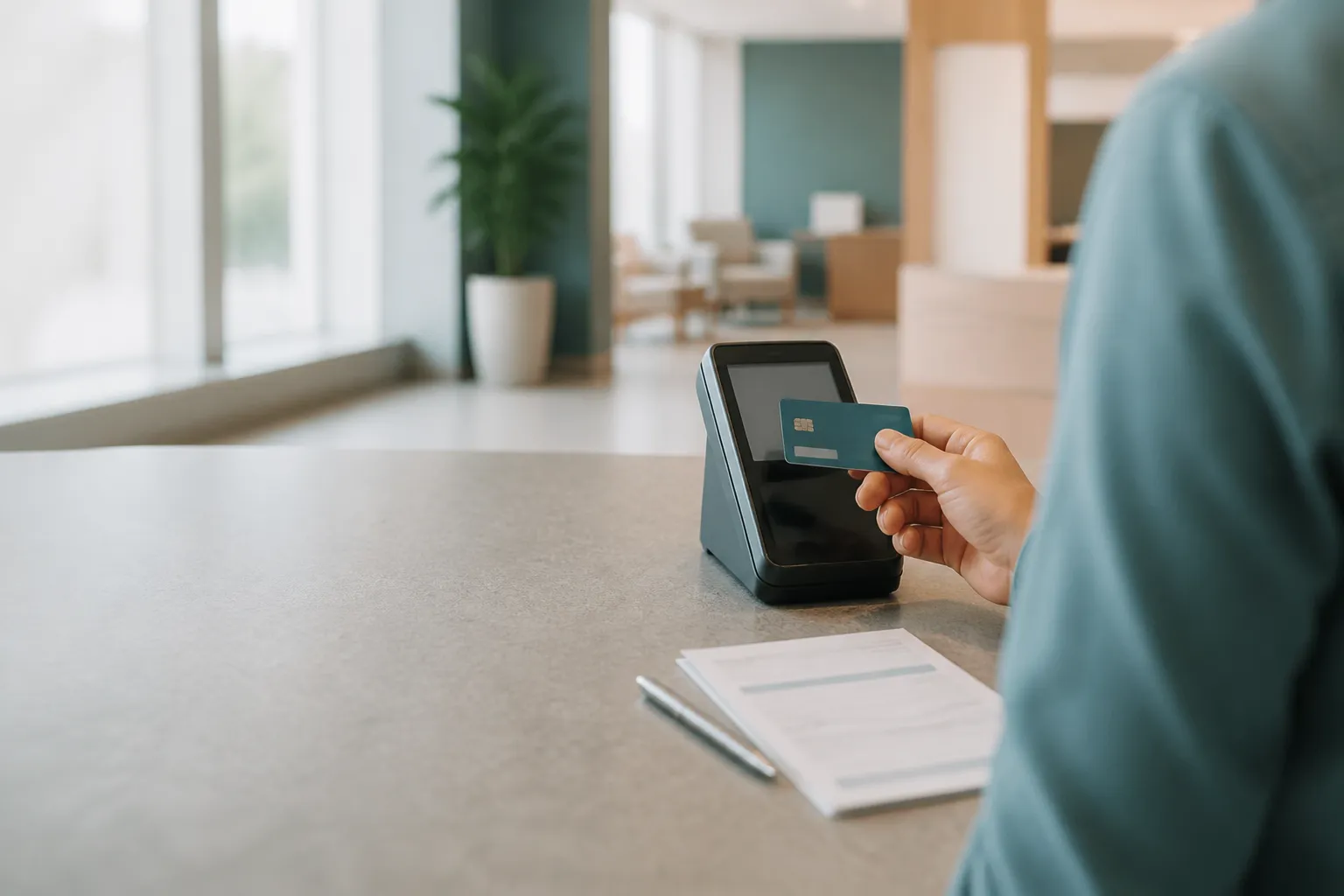
What the opt-in rule covers
The rule sits in 12 CFR 1005.17, part of Regulation E. It says a bank may not charge a fee for paying an ATM withdrawal or a one-time debit card purchase under an overdraft service unless you have opted in. The CFPB's official commentary explains how the rule applies in different situations.
The rule is narrow. It applies to ATM and one-time debit card transactions. It does not apply to written checks, ACH transfers, or recurring debit payments, according to a law firm summary of the CFPB's circular. For checks and ACH payments, the CFPB's consumer guidance indicates the bank's overdraft program can pay the item and charge a fee without an opt-in under this rule. The sources I reviewed do not go into detail on recurring card payments, so check your own account agreement for those.
How consent is supposed to work
Before you opt in, the bank must give you a written or electronic notice describing its overdraft service. After you opt in, it must confirm your choice in writing or electronically and tell you that you can revoke it. You can change your mind later.
Banks also have to keep records that show they followed these steps. The law firm summary says the kind of proof depends on how you enrolled:
- In person or by mail: a signed or initialed form.
- By phone: a recorded call.
- Online or in an app: a secure electronic signature that cannot be altered.
That list matters most when something goes wrong. If a fee lands on your account and the bank cannot show how you agreed, the charge may be a Regulation E problem.
What the CFPB has said about violations
The same law firm summary reports that the CFPB published Circular 2024-05 on September 17, 2024. I could not check the circular itself, so treat the details below as secondhand. The summary says the bureau found that charging overdraft fees on ATM and one-time debit transactions without proof of opt-in can violate the Electronic Fund Transfer Act and Regulation E. It describes the CFPB's term for this as a "phantom opt-in."
The summary also says some institutions had opt-in policies on paper but did not follow them consistently. The bureau reportedly flagged other problems too, including deceptive and abusive tactics used to get consent. If you see a fee on a card purchase and you do not remember ever choosing coverage, that is worth a question to your bank. Ask what record it has of your consent.
How overdraft fees add up
An overdraft happens when your account lacks the funds for a transaction and the bank pays it anyway. The CFPB's overdraft opt-in explainer says that once you opt in, you can usually withdraw cash or make a purchase even without enough money. The fee generally applies when the transaction settles against a negative balance, which can be later than the swipe.
The fee is typically a fixed amount no matter how small the purchase, and several can hit in one day. In a 2012 example from the CFPB's overdraft status post, a $4 coffee could cost $35 in fees, and a small pack of gum another $35, on the same day. That is $70 on roughly $5 of purchases. Fee amounts have likely changed since then, and the sources I reviewed do not give current figures. Many banks also charge an extended overdraft fee if the shortfall is not repaid within a few days, so read your fee schedule.
Questions to ask about your account
The CFPB suggests checking your opt-in status and deciding whether debit and ATM overdraft coverage fits your needs. You can decline coverage, and you can revoke it later. Declining means a purchase that exceeds your balance will usually be declined instead of paid with a fee. It does not change how checks or ACH payments are treated.
Start with these questions when you call or visit your bank:
- Have I opted in to debit card and ATM overdraft coverage, and how did I give that consent?
- Does the bank charge an extended overdraft fee if I do not repay quickly?
- Will my transactions be approved, with fees, when my balance is negative?
Some gaps remain. The sources I reviewed do not cover state laws that may add rules beyond Regulation E. They also do not explain how to file a complaint or seek a refund for an improper fee. For those questions, start with the CFPB's consumer resources or your bank's complaint process.
Please seek a professional. This article is general information, not financial, tax or insurance advice. Please seek a licensed financial, tax or insurance professional about your own situation.


