 Credit Score Education
 Credit Reporting & Consumer Rights
 Personal Finance Tips
 Budgeting & Money Management
 Identity Theft & Fraud Prevention
 Credit Card Education
 Consumer Financial News
 Cost of Living & Inflation
 Banking & Savings Education
 Consumer Protection & Financial Literacy


A simple monthly budget is not a personality test. It is a count. What came in, what went out, and what was left after the bills and everyday spending. Once you can see those three pieces, decisions about saving, debt payments, or cutting back tend to get less fuzzy.
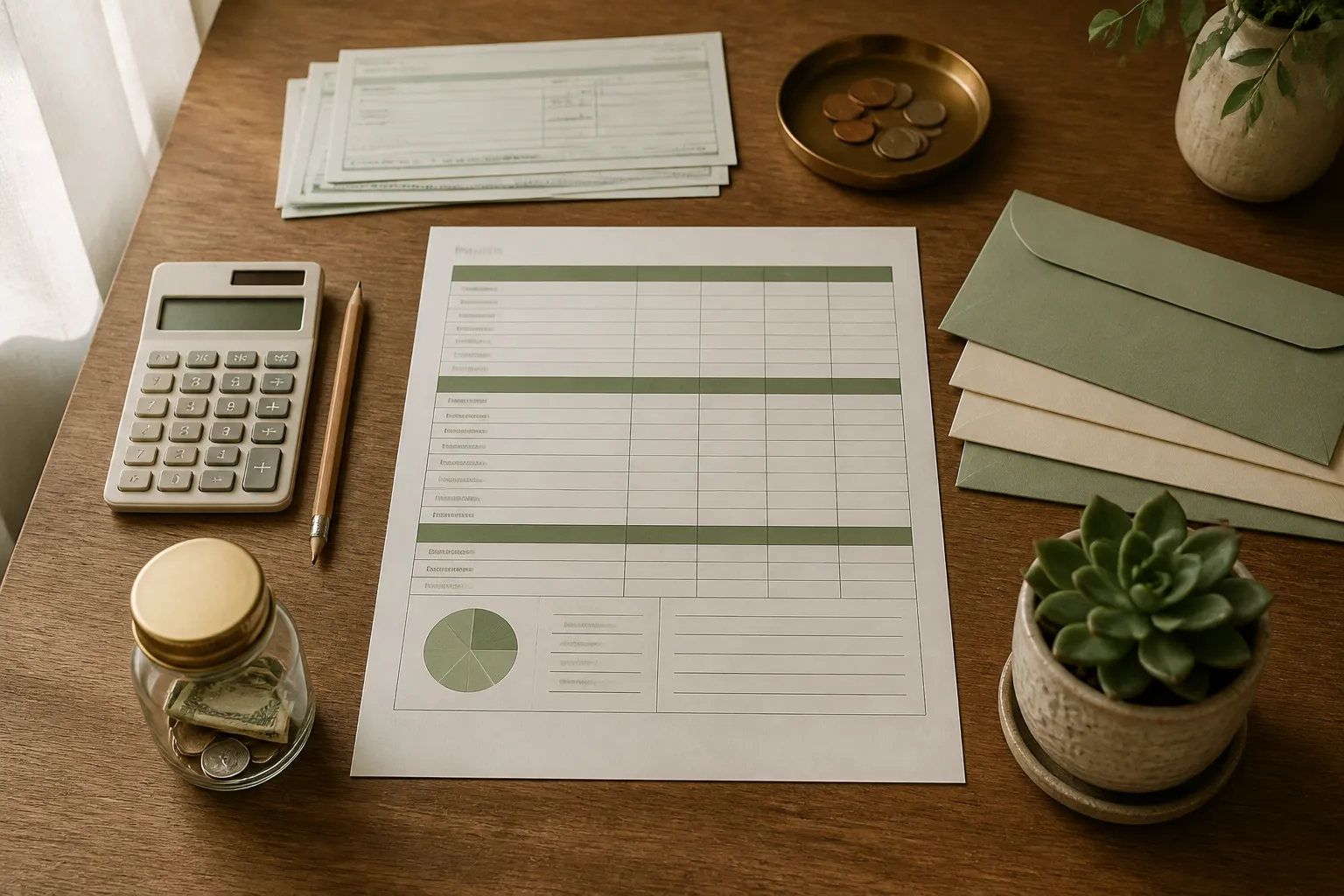
Why a budget starts with an honest picture
A budget works best when it starts with real numbers, not the numbers you wish were true. The Consumer Financial Protection Bureau describes budgeting as a way to see how much money comes in and where it goes. That picture matters because you cannot know whether money may be available for savings, debt repayment, or a future purchase until the regular spending is on the page.
This is also why a budget should not feel like a punishment. The point is not to make every dollar feel painful. The point is to check whether your current money routine can cover what you need each month. consumer.gov puts it plainly, a budget can help make sure you will have enough money every month.
That matters for small goals and long ones. MyMoney.gov frames a spending plan as part of using money wisely and setting short-term and long-term goals. That could mean building a cushion, saving for a car repair, planning for a move, or making room for payments you already owe. The first job is to stop guessing.
Step 1: Write down every source of income
Start with income because every other line depends on it. For many people, this is one paycheck. For others, it is a mix of part-time work, self-employment, tips, child support, government benefits, or money from more than one job. The CFPB specifically points readers to record every source, including irregular income and benefits.
Use take-home pay when you can, meaning the amount that actually lands in your account or is available to spend. If income changes from month to month, do not pretend it is steady. Write down what you know, then mark the uncertain pieces. A budget built on a best-case month may look comfortable on paper and still fail in real life.
If you are starting from scratch, keep this step simple. Open a notebook, spreadsheet, printed worksheet, or plain document. Make one section called income. Add each source on its own line. If one source arrives weekly and another arrives monthly, label that too. The goal is not perfect formatting. The goal is to know what number the rest of the budget has to live inside.
Step 2: Track where the money goes
Next comes spending. This is the part that can feel annoying, but it is also where the useful information shows up. The CFPB suggests logging spending over an average month and sorting it into categories such as housing, utilities, eating out, and entertainment. If a full month feels like too much, start with one week.
One week is enough to reveal patterns. Gas, groceries, school lunch money, streaming charges, pet food, parking, coffee, medicine, and delivery fees all count. Small charges are still charges. A few dollars here and there can make the difference between having money left over and wondering where it went.
MyMoney.gov also notes that tracking spending over a few weeks or months can show how money is actually used. That longer view helps with bills that do not arrive every week. Insurance, subscriptions, annual fees, gifts, and seasonal costs may be easy to miss if you only look at yesterday’s bank balance.
You can use an online system, a phone app, a spreadsheet, or paper. The sources mention digital tools as options, but they do not require one. Pick a method you will actually open. A messy notebook that gets used is more helpful than a color-coded file you avoid.
Subtract expenses from income
Once income and expenses are listed, do the basic math. The consumer.gov budget worksheet method is straightforward: fill in income, fill in expenses, then subtract expenses from income. If the number is positive, that may show room for savings, debt repayment, or another goal. If the number is negative, the plan needs changes before it can support a new goal.
This step can be uncomfortable, especially if the result is smaller than expected. Try to treat the number as information. A budget is not a verdict. It is a draft. If the first version shows that expenses are higher than income, that is a sign to review categories, timing, and commitments before the next month repeats the same problem.
The format is flexible. The CFPB says the steps are meant to help create a budget that works for you personally. Some households like a monthly calendar because bill due dates matter. Others prefer a list of categories. Some people separate fixed costs, like rent, from flexible costs, like eating out. The best format is the one that lets you compare income and spending without hiding anything important.
Use categories to set limits
After the first round of tracking, turn the categories into spending limits. MyMoney.gov suggests setting maximum weekly or monthly spending amounts as one way to control spending. This is where a vague idea becomes a number you can check before buying.
For example, “spend less on takeout” is hard to measure. “Keep takeout under a set monthly amount” is easier to test. The number does not have to be perfect at first. It should be realistic enough that you can try it for a month, then see what happened.
Limits also help with tradeoffs. If more money goes to one category, less may be available somewhere else. That does not mean every fun purchase has to disappear. It means the plan should show the cost of the choice before the money is gone.
The CFPB also teaches the 50-30-20 rule as a framework for looking at needs, wants, and savings through its analyzing budgets activity. Before applying any framework, read the source and make sure the definitions fit your situation. A rule of thumb can be a useful check, but it cannot see every household’s rent, medical costs, family responsibilities, or income pattern.
Watch for the spending that sneaks around the plan
A budget can get knocked off course by purchases that seem smart in the moment. A sale price, coupon, or limited-time discount can still drain money that was supposed to cover groceries, bills, savings, or debt payments. MyMoney.gov warns against buying items because of a sale or coupon when they are not in the spending plan.
That does not mean every discount is bad. It means the budget comes first. If the purchase was already planned and the lower price helps, that may fit. If the purchase only exists because the discount appeared, pause and check the category limit. A deal can still create a shortfall.
For larger purchases, MyMoney.gov suggests comparing prices at several stores, in person or online. That step gives you time to think and reduces the chance that urgency makes the decision for you. It also helps separate a real need from a good-looking offer.
Use questions to test the budget before the month ends
A budget should answer a few basic questions. Where does the money come from? Where does it go in an average month? After expenses, is there money left for savings goals or debt repayment? If not, which categories need another look?
Another useful question is whether you can tell what will be left at the end of the month. If the answer is no, the budget is not detailed enough yet. That uncertainty is a warning sign. It usually means some income, spending, due dates, or irregular bills are still missing from the picture.
Some topics need more than a starter budget. Emergency fund targets, variable income, changing bills, and the order of paying down debts can involve extra details. For current worksheets and consumer education tools, official resources such as the CFPB, consumer.gov, MyMoney.gov, and the FTC can be good places to continue learning.
The first version of a budget does not need to be elegant. It needs to be honest enough to use. Count the income. Track the spending. Subtract the expenses. Then adjust one category at a time until the plan starts to match the month you actually live.
Please seek a professional. This article is general information, not financial, tax or insurance advice. Please seek a licensed financial, tax or insurance professional about your own situation.


