Credit Score Education
 Credit Reporting & Consumer Rights
 Personal Finance Tips
 Budgeting & Money Management
 Identity Theft & Fraud Prevention
 Credit Card Education
 Consumer Financial News
 Cost of Living & Inflation
 Banking & Savings Education
 Consumer Protection & Financial Literacy


A late mark that does not match your records is worth a slow look. Put each month's entry on the report next to your own bank records. Look for wrong dates, repeated entries and accounts that are not yours. Four checks give you a place to start.
- Verify that every listed account number, balance and opening date matches an obligation you actually took on.
- Review the payment status for each month to confirm no on-time payment is marked late.
- Check the date of first delinquency to make sure an older problem is not shown as recent.
- Gather bank statements, canceled checks and receipts that show each disputed payment was made on schedule.
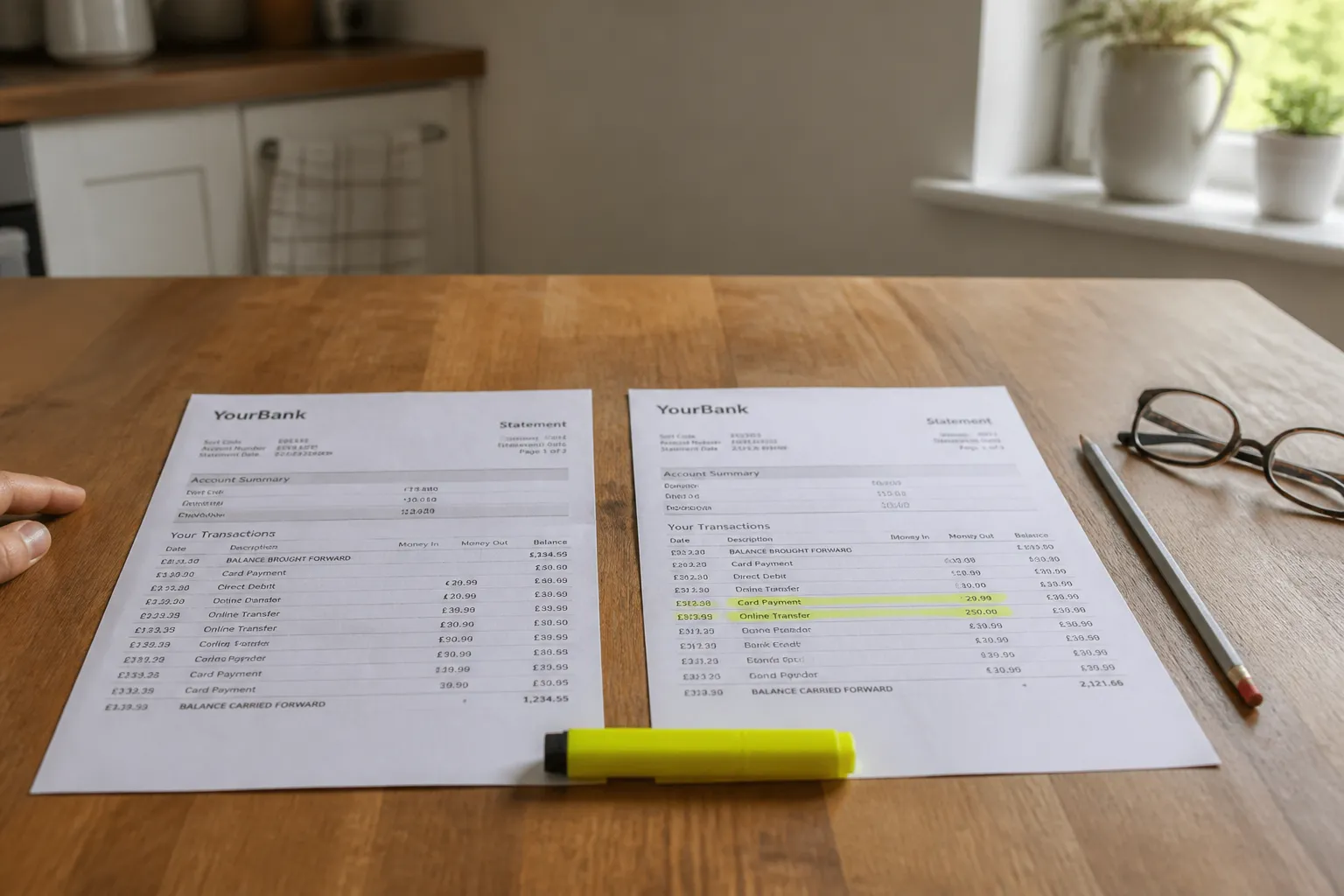
What a late-payment error looks like
A late-payment error happens when a credit file marks an account as late or delinquent even though you paid on time, or when it shows more late marks than your statements support. The Consumer Financial Protection Bureau says to check whether accounts are reported as late or delinquent when they should not be. The mistake could be one wrong mark. It could also be a run of late marks that never occurred.
The date of first delinquency deserves a close look. The CFPB lists it among the items to confirm. If that date is wrong, an older problem may look recent. Check the date of last payment and the date opened as well. Compare each date against your saved monthly records. A wrong month is easy to miss and may make an account look worse than it is.
Duplicate reporting is another red flag. The CFPB notes that the same debt may be listed more than once, sometimes under different names. If one late payment shows up on several separate lines, raise every duplicate in your dispute. Also check the current balance and the credit limit on each account.
Account status errors matter too. A closed account may still be shown as open. An account where you are only an authorized user may be listed as one you own. The CFPB names both as common errors.
Gather your records before you dispute
Before you contact anyone, collect the paperwork that supports your case. Useful items include monthly statements, electronic payment confirmations, canceled checks and letters from the creditor. The CFPB says to send copies of supporting documents, not originals. Keeping the originals together in one folder is a simple habit, though that tip is ours and not from the agency.
Next, confirm the account is really yours. Look at the account number, the opening date and the identity details on your file, such as your name, past and current addresses and phone numbers. The CFPB also points to mixed files, where information from another person with a similar name ends up on your report. A late payment on your report could belong to someone else.
Then print the report page that contains the questionable entry. The CFPB says to circle or highlight the disputed items on the copy you send. A short note beside each one, with the account number and the exact conflict, keeps your submission easy to read.
If you do not yet have your reports, check the instructions in the report materials you already have, or the official contact details listed there, for how to request them.
How to dispute the error
Fixing an error generally means contacting both the credit reporting company and the company that supplied the information, known as the furnisher. Start by explaining in writing what is wrong and why. USAGov says to send the dispute to the credit reporting company and to the furnisher that reported the incorrect information.
The CFPB dispute guidance lists what a mailed dispute letter should include:
- Your full name, address and phone number
- The credit report confirmation number, if available
- Each error, identified clearly by account number
- A clear explanation and a request that the item be corrected or removed
- A copy of the report page with the disputed items circled or highlighted
- Copies, not originals, of your supporting documents
You can send the letter by certified mail and ask for a return receipt. That gives you a record that it was received. Keeping a duplicate of the whole package is a sensible step of our own suggestion.
If you find an account you never opened, it may signal identity theft. In that case, report it at IdentityTheft.gov, the federal government's one-stop resource for reporting and recovering from identity theft.
When the dispute does not fix it
If your written dispute with the credit reporting company does not correct the error, USAGov says you can file a complaint with the CFPB. Include the documents you sent with the original dispute and any written replies you received.
Deadlines for an investigation vary, and we could not confirm them here. Read the response letter you receive for the timing and any further steps it offers. Removing a late payment that is accurate is a separate question, and this guide does not cover it.
A dated log may help while you wait. Note each letter, postal receipt and reply, so you can show the day your dispute went out. That is practical advice, not an official requirement.
You might also ask the furnisher in writing to confirm the date of first delinquency. Ask whether the same late payment appears more than once, and whether the account is yours or an authorized-user or mixed-file record. Errors on a credit report can affect your credit score and your ability to get a loan or rent a property, according to USAGov. How much a corrected late mark would change your score is not something we can say.
Please seek a professional. This article is general information, not financial, tax or insurance advice. Please seek a licensed financial, tax or insurance professional about your own situation.