 Credit Score Education
 Credit Reporting & Consumer Rights
 Personal Finance Tips
 Budgeting & Money Management
 Identity Theft & Fraud Prevention
 Credit Card Education
 Consumer Financial News
 Cost of Living & Inflation
 Banking & Savings Education
 Consumer Protection & Financial Literacy

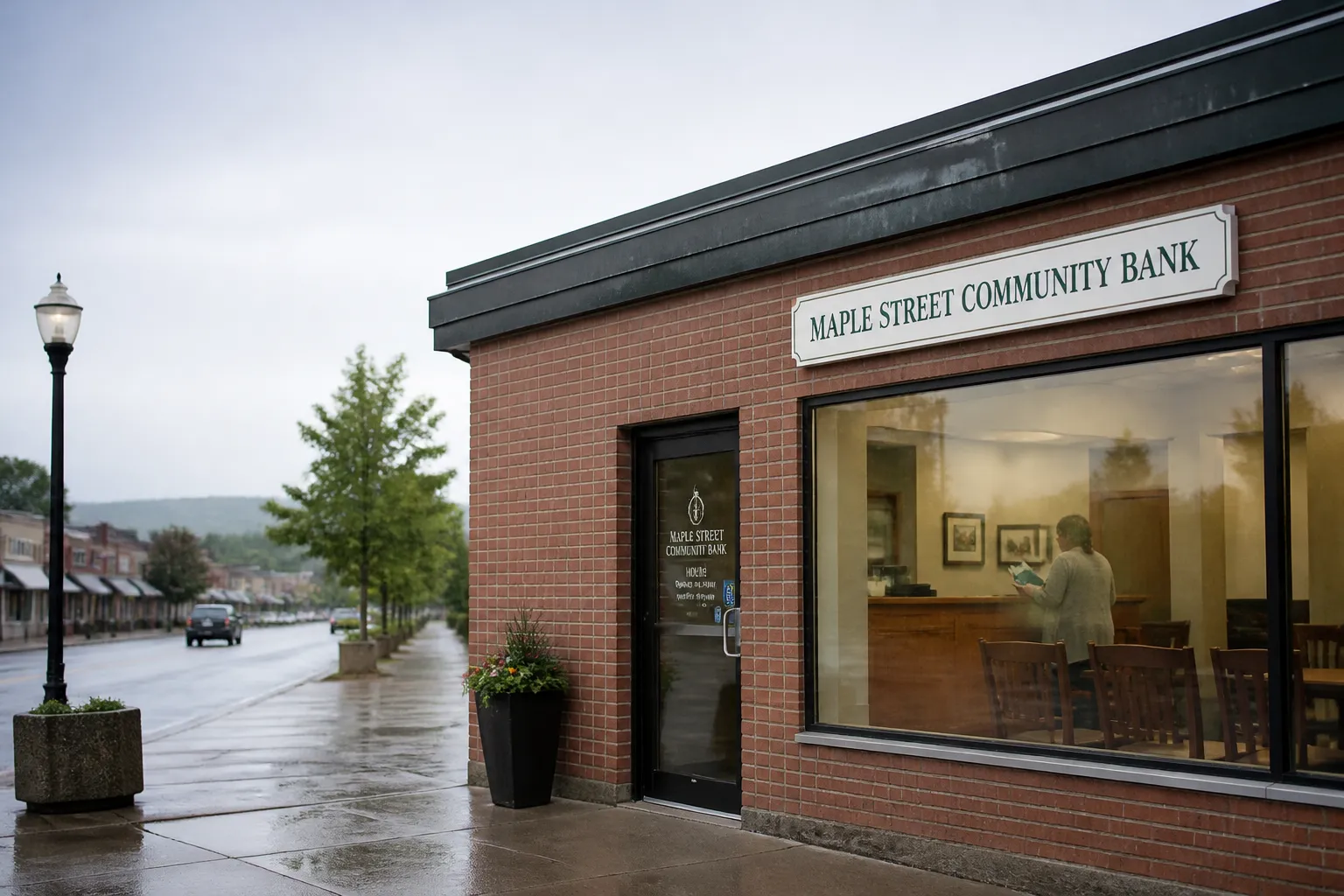
Putting cash into a high-yield savings account allows household reserves to earn interest while remaining liquid. The headline rate often attracts attention, but the statutory protections, balance thresholds, and transfer rules behind that number determine whether the account actually meets your needs.

Cash kept in a standard checking account or a low-interest brick-and-mortar savings account rarely keeps pace with inflation. Moving excess operational cash into a dedicated savings vehicle can improve the return on an emergency fund or a short-term savings goal.
At the same time, opening an account without verifying its legal structure introduces unneeded risk. Online deposit platforms use varied business arrangements, and not every interface that displays a yield functions as an independent, chartered financial institution.
Evaluating an account requires looking at deposit insurance, compounding formulas, withdrawal access, and account security. Taking each component in order prevents common surprises when moving money between institutions.
What a High-Yield Savings Account Is and How Its Rate Is Measured
A high-yield savings account, often referred to as an HYSA, is a deposit account that pays an interest rate substantially higher than a traditional savings account at a branch-heavy commercial bank. Most of these accounts are administered by direct online banks that maintain low physical overhead, which permits them to pass higher yields to depositors. Many online accounts require no minimum opening deposit and do not assess monthly maintenance fees, though exact provisions vary by charter.
Savings yields are expressed as an annual percentage yield, or APY. Unlike a simple interest rate, the APY accounts for compounding frequency, showing the total amount of interest an account earns over one year assuming the balance and rate remain constant. In the United States, Regulation DD (12 CFR Part 1030), enforced by the Consumer Financial Protection Bureau, sets the exact statutory formula and disclosure requirements banks must use when advertising APY. Comparing APYs directly gives an accurate mathematical baseline, whereas comparing nominal rates can obscure the impact of daily versus monthly compounding.
These rates are almost universally variable. A bank can adjust its APY upward or downward at any time without advance notice, and these adjustments usually track changes in the benchmark federal funds rate established by the Federal Reserve. A rate that appears at the top of the market in a given month can decline as monetary policy shifts. Published comparison tables from third-party websites can provide a general view of prevailing terms, but commercial tables are not regulatory filings. Depositors should always read the institution's official disclosure document to confirm the current yield before initiating a deposit.
Confirm Deposit Insurance Before You Deposit Money
The primary safety consideration for any cash reserve is confirming federal deposit insurance. In the United States, commercial banks are insured by the Federal Deposit Insurance Corporation. The FDIC is an independent agency established by Congress to maintain stability and public confidence across the banking system. For credit unions, equivalent coverage is administered by the National Credit Union Administration through the National Credit Union Share Insurance Fund, which was created by Congress in 1970 and carries the full faith and credit of the federal government.
Standard FDIC deposit insurance protects depositors against institution failure up to at least $250,000 per depositor, per insured bank, for each distinct ownership category, such as single accounts or joint accounts. The NCUA Share Insurance Fund provides identical statutory limits of $250,000 for member share accounts. If an insured institution fails, regulatory procedures ensure depositor access to insured funds up to the legal cap.
Never rely solely on an informal marketing badge or an app graphic to verify insurance. You can verify a bank's active charter directly through the FDIC BankFind directory, where you can match the institution's legal name, headquarters address, and FDIC certificate number. If an entity cannot produce a verifiable certificate number or does not appear in official registry databases, do not deposit money there. In addition, financial technology applications that act as intermediaries rather than chartered banks require close scrutiny. The regulator's guide on banking with third-party apps notes that pass-through insurance depends on specific custodial account arrangements. If those legal conditions are not satisfied, recovery of balances during an intermediary failure may become complex.
Read the Conditions Behind an Advertised Rate
A prominent APY often comes with structural conditions that are detailed only in the account agreement. Many institutions use balance tiers, paying the top yield only on balances up to a specific dollar cap, or requiring a high minimum balance before the top rate activates. For example, an account may offer an elevated APY on the first $5,000 and a standard base rate on all funds above that threshold. Reviewing the complete tier schedule shows what your specific expected balance will earn.
Promotional terms can also require recurring activity. Certain accounts condition their top rate on receiving a monthly direct deposit of a specific size, or completing a fixed number of debit card transactions. If a depositor misses that requirement during a statement cycle, the account may revert to a negligible default rate. When evaluating a product, determine the baseline APY that applies if no extra promotional tasks are completed.
Operating costs can also reduce your net return over time. Review the fee schedule for recurring monthly maintenance charges, fees for outgoing wire transfers, paper statement fees, and dormancy penalties. Transfer timing also demands operational planning. Automated Clearing House transfers between an external bank and a high-yield savings account typically take one to three business days to settle. If you anticipate needing cash on short notice, verify the institution's withdrawal holding periods and transfer caps in advance.
Compare Options and Set Up the Account Safely
Before opening an account, assemble and compare disclosures from at least three different institutions. Track five key metrics: the APY, the required balance tiers, the monthly fee schedule, the minimum opening deposit requirement, and standard transfer settlement times. Writing these data points into a side-by-side comparison clarifies the trade-offs between yield and account flexibility.
Once you select an institution, submit your application directly on the bank's verified website or through its authenticated application. Federal law, including identity verification rules under the USA PATRIOT Act, requires banks to confirm customer identity prior to opening an account. Be prepared to provide your legal name, physical address, date of birth, and Social Security number or Individual Taxpayer Identification Number, along with an unexpired government identity card. Never transmit unencrypted identity documents or account details across email or unsecured direct messaging channels.
Protecting the account requires consistent security maintenance:
- Create a unique, complex passphrase that is not shared with any other financial or email profile.
- Activate hardware-based or app-based multifactor authentication rather than relying strictly on text messages for verification codes.
- Set up automated transaction and balance notifications to detect unauthorized movements immediately.
- Verify sender identity independently if you receive unexpected text messages or telephone calls requesting security codes or account confirmations.
Regular oversight ensures the account continues to function as planned. Check account statements each month to review interest credits and confirm that no unfamiliar charges have appeared. Because variable yields shift over time, reviewing your savings terms once or twice a year helps verify that your chosen account remains competitive, transparent, and fully insured under federal rules.
Please seek a professional. This article is general information, not financial, tax or insurance advice. Please seek a licensed financial, tax or insurance professional about your own situation.


