 Credit Score Education
 Credit Reporting & Consumer Rights
 Personal Finance Tips
 Budgeting & Money Management
 Identity Theft & Fraud Prevention
 Credit Card Education
 Consumer Financial News
 Cost of Living & Inflation
 Banking & Savings Education
 Consumer Protection & Financial Literacy


Free tax preparation assistance can be an invaluable community service for eligible taxpayers during filing season. When you sit down with a volunteer or upload files to a community clinic, however, you place sensitive data directly into another person's hands. Your Social Security number, home address, bank account numbers, and wage statements all sit on the table. Knowing exactly how that information is handled, and how official programs are required to protect it, forms your first defense against identity theft.
What the Sources Cover and What They Do Not
Public tax help directories point millions of filers toward no-cost assistance every spring. The Internal Revenue Service maintains a portal for free tax return preparation for qualifying taxpayers. While this resource indicates that free preparation exists for qualifying individuals, the page navigation alone does not lay out specific income thresholds or operational data security rules. Filers must check the live system directly to confirm their qualifying status before booking an appointment.
Similarly, the agency lists Topic no. 101 to address volunteer tax assistance, outreach programs, and identity theft. The index links these subjects together, but the directory entry does not spell out the exact day-to-day data storage protocols used at local sites. Many technical government filings, such as archival documents on security and confidentiality, exist primarily as system records or bare headers. Taxpayers should never assume that every site operates under identical conditions without asking direct questions on the ground.
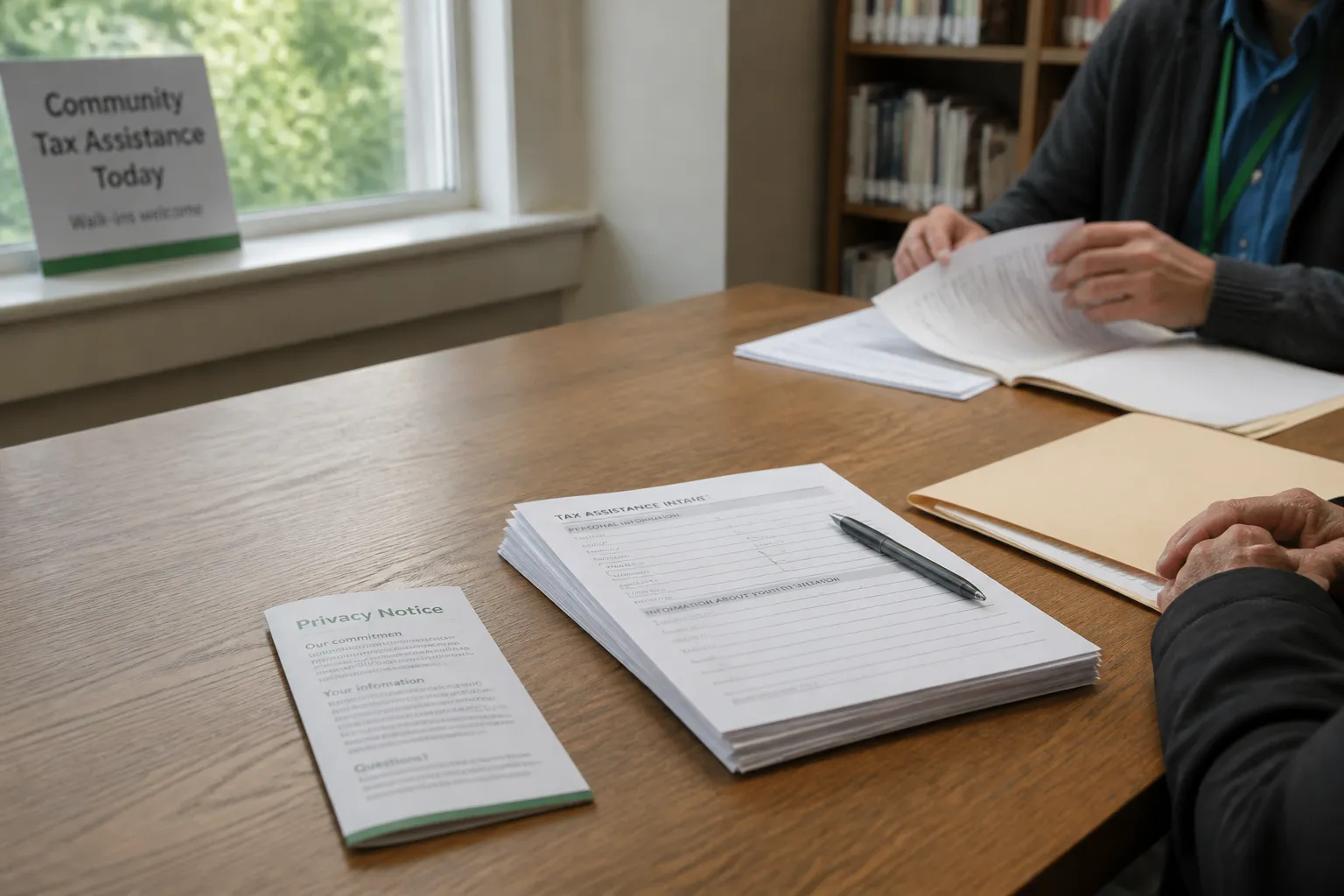
Publication 4299 and Volunteer Privacy Obligations
Official volunteer tax assistance programs operate under a defined public trust standard. The primary benchmark for this work is IRS Publication 4299, titled Privacy, Confidentiality, and Civil Rights: A Public Trust. This document serves as the formal foundation for how volunteer preparers must treat taxpayer records, restricting access strictly to what is required to complete an accurate return.
Informal study guides and third-party sites, such as homework answers hosted on Chegg, often mention that volunteers use Publication 4299 to determine return scope and confidentiality practices. Outside homework sites are not authoritative references for tax law or security compliance. Filers should look directly to official program materials to understand the rules. Reference excerpts, including legal aid materials on identity and Social Security number handling, underscore that volunteer sites must handle personal identifiers with strict care. Before handing over your paperwork, you have the right to ask the site coordinator how your physical documents and digital scans will be secured during and after preparation.
The Identity Protection PIN
A primary tool against tax-related fraud is the federal Identity Protection PIN. According to the IRS, an IP PIN is a specific identifier assigned to prevent unauthorized individuals from filing a fraudulent tax return using someone else's personal information. The agency explains how taxpayers can get an identity protection PIN through its verified portals to secure their account against identity thieves.
Using this extra layer can stop a fraudulent return from processing, because the electronic filing system rejects submissions that lack the required number. The agency emphasizes that using an IRS Online Account and identity protection PINs can help shield filers from scammers. If you have been issued a PIN in the past, your volunteer preparer will need to enter it to submit your return successfully. Do not share this number across unsecured email or casual messaging threads before your scheduled intake session.
Questions to Ask Before You Share Personal Data
Taking a proactive stance at a filing clinic helps ensure that your personal files do not linger in unmonitored spaces. Before you hand over your paperwork, take a moment to interview the intake team about their operational workflow. A reputable site will welcome your questions and provide straightforward answers.
- Does this site strictly follow the standards of IRS Publication 4299 for privacy and confidentiality?
- Who will have physical or digital access to my tax forms while my return is being prepared?
- Will my paper documents remain in my possession, or will copies be retained overnight?
- If forms are scanned, what system is used to store them, and when are those scans deleted?
- Does the preparer need my Social Security card solely for identity verification, or is a copy being filed away?
Legitimate volunteers are trained to handle intake with care. If a site worker cannot explain how your records are kept secure, or if personal paperwork is left unattended on public tables, pause the process and ask for the site manager.
Warning Signs and Next Steps
Scammers frequently take advantage of filing deadlines by impersonating free community tax clinics or government agencies. Unsolicited text messages, phone calls, or emails promising free filing assistance or instant refunds are significant warning signs. The IRS does not initiate contact through cold outreach to request PINs, passwords, or complete Social Security numbers. Always initiate contact yourself by accessing verified local programs through official agency pages.
If you suspect that your identity has been compromised at a preparation site or elsewhere, move quickly to limit potential damage. Contact the Federal Trade Commission through its dedicated reporting portal to generate a personal recovery plan, and notify the IRS immediately to place alerts on your tax account. You can also consult the Consumer Financial Protection Bureau for educational materials on fraud resolution and monitoring your credit files. Verifying program credentials ahead of time remains the most effective way to keep your personal records safe.
Please seek a professional. This article is general information, not medical advice. Please seek a doctor or other qualified health professional about your own situation. In an emergency, call 911 or your local emergency number.