 Credit Score Education
 Credit Reporting & Consumer Rights
 Personal Finance Tips
 Budgeting & Money Management
 Identity Theft & Fraud Prevention
 Credit Card Education
 Consumer Financial News
 Cost of Living & Inflation
 Banking & Savings Education
 Consumer Protection & Financial Literacy


A grocery receipt records what left your bank account, but it rarely shows how much product came home in the bags. Over the last several years, packages on grocery shelves have occasionally tightened their dimensions, shedding an ounce here or a few sheets there while keeping the retail price steady. To catch those shifts before they compound across a month of meals, shoppers need to look past the register total and inspect the fine print on the shelf edge.
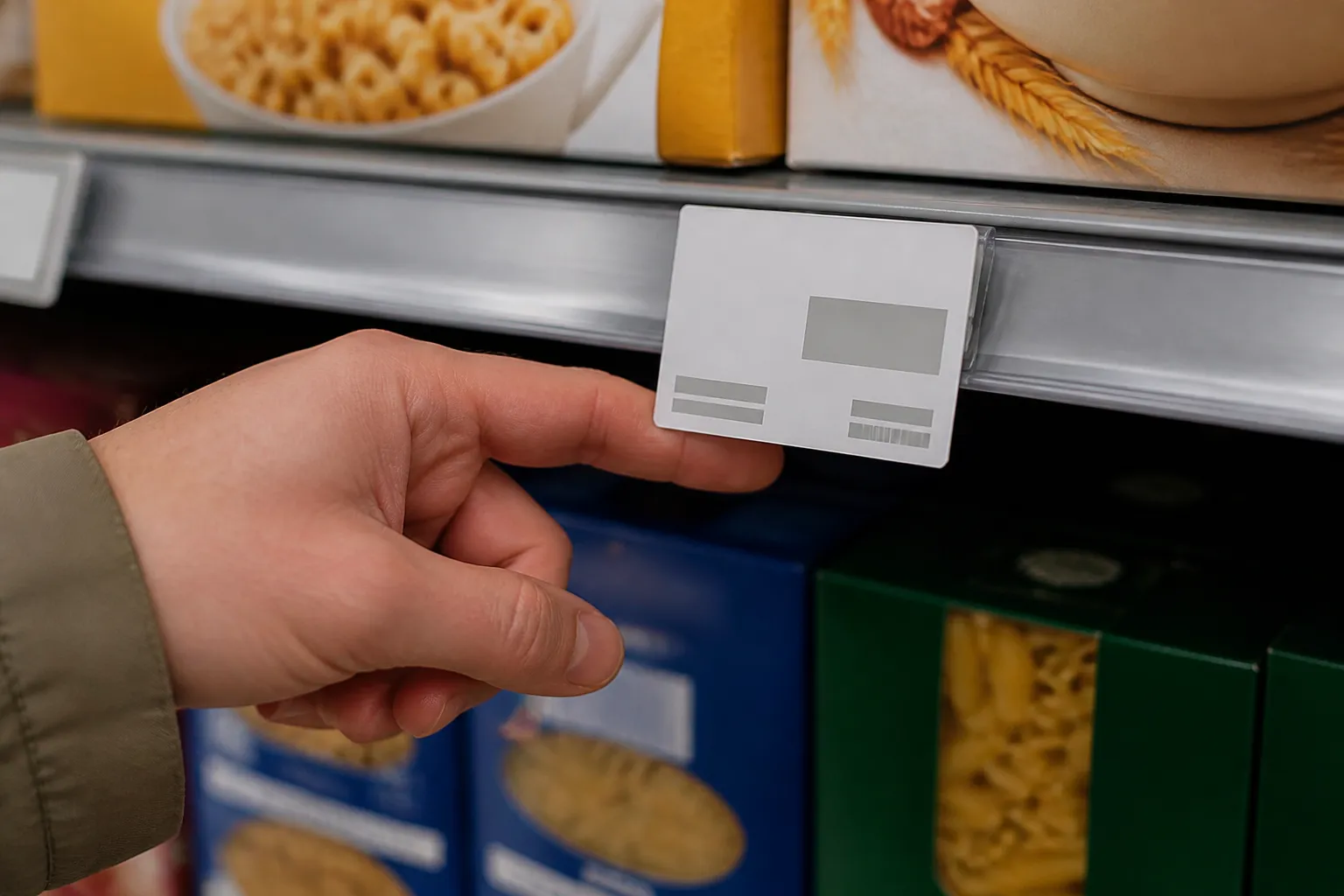
The shelf channel provides two distinct numbers. The prominent numeral tells you what the cashier will scan, while the smaller print calculates the cost per standard ounce, pound, or count. When an item undergoes downsizing, that smaller figure is the first place the change registers.

Tracking those small figures turns a vague suspicion about lighter boxes into an objective household ledger. It offers a clear, ground-level record of what your money actually buys week to week.
What shrinkflation is and why it matters for a grocery budget
Shrinkflation, known formally as product downsizing, happens when a manufacturer trims the quantity of an item without a proportional drop in its retail price. In many instances, the sticker price stays identical. In other cases, the shelf price drops slightly, yet the price per unit still ends up higher than it was before the reformulation, as detailed in research by the U.S. Government Accountability Office. In either situation, the household receives less food or household supply for roughly the same cash outlay.
Manufacturers often turn to downsizing when their own operational costs rise. Rather than announcing a visible price hike that might steer buyers toward a competitor, a producer can choose to shave volume from the container. The GAO observed that firms weigh how shoppers and rivals will react before altering a package. The practical result at the kitchen table is subtle: cereal boxes empty a day sooner, or a bottle of cooking oil requires replacement a week early, with no obvious signal at checkout.
This practice does not strike every aisle equally. According to a GAO report on product sizes, downsizing contributed very little to broad, economy-wide inflation indexes between 2019 and 2024 because downsized items formed a small fraction of all tracked goods. However, certain grocery categories saw repeated adjustments. Because macro inflation statistics smooth out these differences across thousands of goods, relying on headline averages can mask what is happening to your specific pantry items.
How unit pricing works on the shelf label
Unit pricing reduces different package sizes to a common metric. Instead of trying to calculate whether a 14.5-ounce can at one price is a better deal than a 28-ounce can at another, the shelf tag provides the cost per standard measure, such as price per ounce, gram, or liter. The National Institute of Standards and Technology highlights uniform unit pricing as a fundamental tool that lets consumers compare value accurately across competing brands and packaging formats.
A typical shelf tag contains several pieces of information: the product description, the stock-keeping code, the net weight, the total package price, and the unit price. When auditing for shrinkflation, the unit price is the figure that matters most. A larger box may appear more economical simply because shoppers associate bulk with savings, but checking the unit price can reveal that the larger container carries a higher per-ounce rate than a modest size sitting beside it.
Reading these tags requires careful attention. As the GAO noted in its review of retail pricing, inconsistent units of measure across similar goods can frustrate quick comparisons. One brand of salad dressing might calculate its unit cost per fluid ounce, while an adjacent bottle lists its cost per 100 milliliters. When units diverge, a shopper must convert the numbers manually to confirm true value. Taking a brief moment to confirm the unit printed on the tag prevents misleading assumptions.
A simple way to audit your own household purchases
Auditing household groceries does not require complex software. A simple sheet of paper or a basic note on a phone works well. Begin by selecting five to ten staple goods that your household purchases on almost every run, such as rolled oats, paper towels, peanut butter, or rice. For each item, log three concrete data points: the stated package net weight, the total price, and the unit price listed on the shelf label.
- Record the specific brand, variety, and container type so you are always measuring the exact same stock item.
- Note the unit price metric, whether it is cost per dry ounce, per fluid ounce, or per individual sheet.
- Update the log once a month or whenever a familiar container feels slightly different in hand.
Comparing new numbers against earlier entries cuts through marketing claims. If a package displays a redesigned graphic or announces an updated recipe, your ledger will tell you what happened to the volume. If the shelf price remains unchanged while the cost per ounce has risen by several cents, the container has quietly downsized. Inquiring whether the package net weight has decreased since your previous purchase helps identify changes that store displays do not advertise.
Warning signs and limits of what you can conclude
The primary signal of downsizing is a per-unit cost that ticks upward while the final register charge appears unchanged or only minimally adjusted. Another warning sign involves changes to the label layout itself, including shelf tags where the unit price field is omitted, printed in faded ink, or swapped to an unusual unit of measure that obscures comparisons. Studies reviewed by the GAO found that consumers react less often to package reductions than to outright price increases, largely because container changes are hard to spot without an intentional record.
At the same time, a personal audit has practical limits. Official studies do not provide an estimate for how much an individual household loses to downsizing over the course of a year, nor do they offer a formula to calculate that exact figure across a full pantry. Your log can verify that a specific cracker box lost two ounces, but it cannot easily isolate manufacturing cost pressures from retailer margin adjustments.
For consumers seeking broader guidance on pricing rules, federal agencies like the Federal Trade Commission offer general resources on deceptive trade practices, while state weights and measures offices oversee retail label compliance. Keeping your own baseline ledger ensures that you make purchasing decisions based on verifiable weight and unit costs rather than package silhouettes.