 Credit Score Education
 Credit Reporting & Consumer Rights
 Personal Finance Tips
 Budgeting & Money Management
 Identity Theft & Fraud Prevention
 Credit Card Education
 Consumer Financial News
 Cost of Living & Inflation
 Banking & Savings Education
 Consumer Protection & Financial Literacy


Housing cost reports tend to arrive with a confident number attached. Rent is up this much, or down that much, or up in one in five counties. A renter reading them can be forgiven for thinking the number is about them. Mostly, it is not. It is about a market, or a method, or a five-year window. That gap is worth a few paragraphs of patience.
Why rent dominates the renter's budget
About 35 percent of American households live in rental housing, and for most of them rent is one of the largest expenses they have. That means small changes matter. A modest increase at lease renewal is not a rounding error when it recurs every month for a year.
Rent also has a stubborn quality. It is due on a set date, in a set amount. Dining out can be trimmed and a subscription can be cancelled on a whim, but the landlord does not accept a lighter month. So the first budgeting question for a renter is usually plain: how much of take-home pay goes to housing, and what remains for everything else? National inflation trends come second, if at all.
Reading the official housing cost measures
The Bureau of Labor Statistics explains in a Consumer Price Index factsheet how rent and rental equivalence are measured. Rental equivalence, in short, estimates what owner-occupied homes would rent for. It underpins much of the official housing inflation reporting. A headline rent figure is therefore a broad economic measure. It is not a bill any one household will receive, which is a footnote worth reading before the headline.
BLS also publishes a New Tenant Rent Index and research series for new tenant rent and all tenant regressed rent. These track rent changes differently from the standard rent measures. The distinction can matter in practice. A renter about to sign a new lease may find new tenant trends closer to their situation. A renter who has stayed in one unit for years may feel existing-rent changes more. Neither series tells you what your landlord will ask next year.
Local rent changes and what the reports cannot tell you
A Census Bureau story reports that renters in 20 percent of U.S. counties paid more during 2020 through 2024 than in the previous five years. The useful part is the unevenness. Housing pressure is not spread like butter across the country. The less useful part, for budgeting, is that it does not say what rent is in your city, your neighborhood, or your building today.
None of the sources here give current local rent levels. Nor do they convert a CPI rent figure into what an individual should expect to pay next year. So treat national and multi-county findings as weather reports for the whole continent. Then check the actual rent on a current lease offer or a local listing, which is the number your budget will really have to carry.
Rent delinquency as an early warning sign
The Consumer Financial Protection Bureau uses new rental payment data to look at rent delinquency, which it describes as otherwise scarce in high-frequency form. Its report on rental housing delinquencies treats falling behind as a potential sign of economic stress and a possible step toward moving or eviction.
The numbers move in a way that is hard to ignore. The share of renters with a late fee in the prior twelve months rose from 15.4 percent at the end of 2021 to 23 percent at the beginning of 2023. It then fell to 14 percent by November 2024. The CFPB also found that about half of renters who incur a late fee return to on-time payment. The rest stay delinquent or drop out of the dataset.
Fees are where the arithmetic gets unkind. Average late fees were around $85 and average non-sufficient funds fees around $40. The CFPB describes multiple fees of the same type within twelve months as frequent. A renter who is already short can watch a small fee repeat itself into a real line item.
Building a budget from what you actually spend
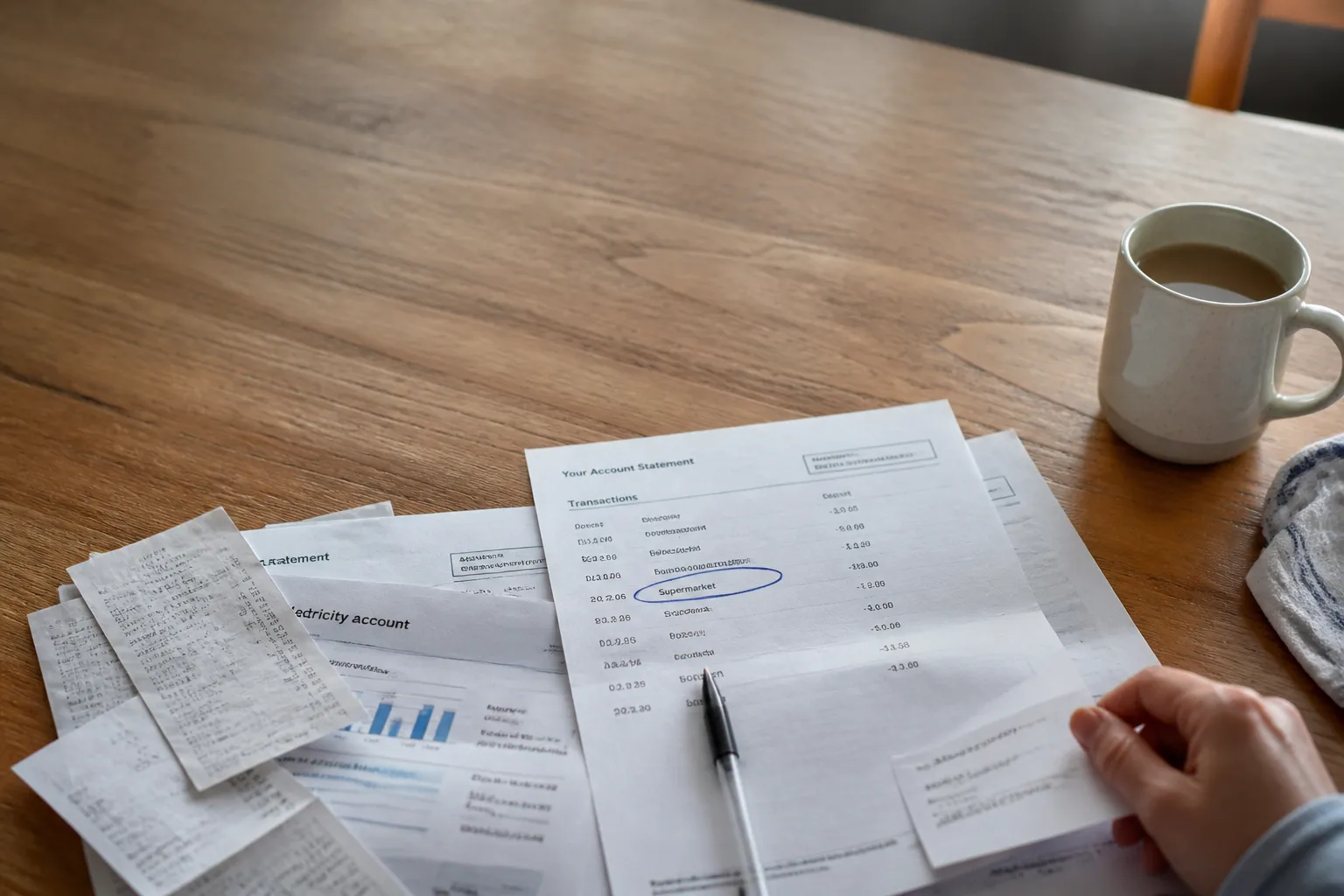
The CFPB's guidance on assessing your spending is written for people planning to buy a home, but it begins with a step that applies to renters too: get a clear picture of current spending, whether you rent or own. It suggests reviewing several months of checking account and credit card history, recording receipts, and drawing up an as-is monthly budget with a miscellaneous category for small or irregular costs.
The method can be whatever suits your habits. Statements, receipts, a notebook, or a tool from a bank, credit union, or private company all count. The point is that the budget reflects what you spend, not what you remember spending. Memory is generous.
With that picture in hand, a few questions become answerable:
- How much of my monthly income goes to rent, and how do other expenses compare?
- Have I recorded every expense, including the small miscellaneous ones?
- If I fell behind, how many fees could stack up in a year?
Gaps to keep in mind
The sources here are silent on several things a renter will likely want. They do not cover tenant rights, lease terms, or what to do after falling behind. They do not explain how rent payments or delinquencies affect credit reports or scores. For those questions, official consumer guidance from the CFPB or FTC and local tenant resources are the better place to start.
One more footnote. The latest delinquency figures run through November 2024, so they describe a past period and not necessarily current conditions. Check for newer releases before drawing conclusions. A snapshot is still useful. It just should not be mistaken for a live feed.
Please seek a professional. This article is general information, not financial, tax or insurance advice. Please seek a licensed financial, tax or insurance professional about your own situation.


