 Credit Score Education
 Credit Reporting & Consumer Rights
 Personal Finance Tips
 Budgeting & Money Management
 Identity Theft & Fraud Prevention
 Credit Card Education
 Consumer Financial News
 Cost of Living & Inflation
 Banking & Savings Education
 Consumer Protection & Financial Literacy


When an unemployment claim is approved, state workforce agencies do not always disburse the funds by mailing a traditional paper check. Millions of workers receive their payments loaded directly onto a prepaid plastic card. While these cards offer quick access to cash at the grocery store or the ATM, they operate under distinct contractual agreements that differ significantly from a personal checking account.
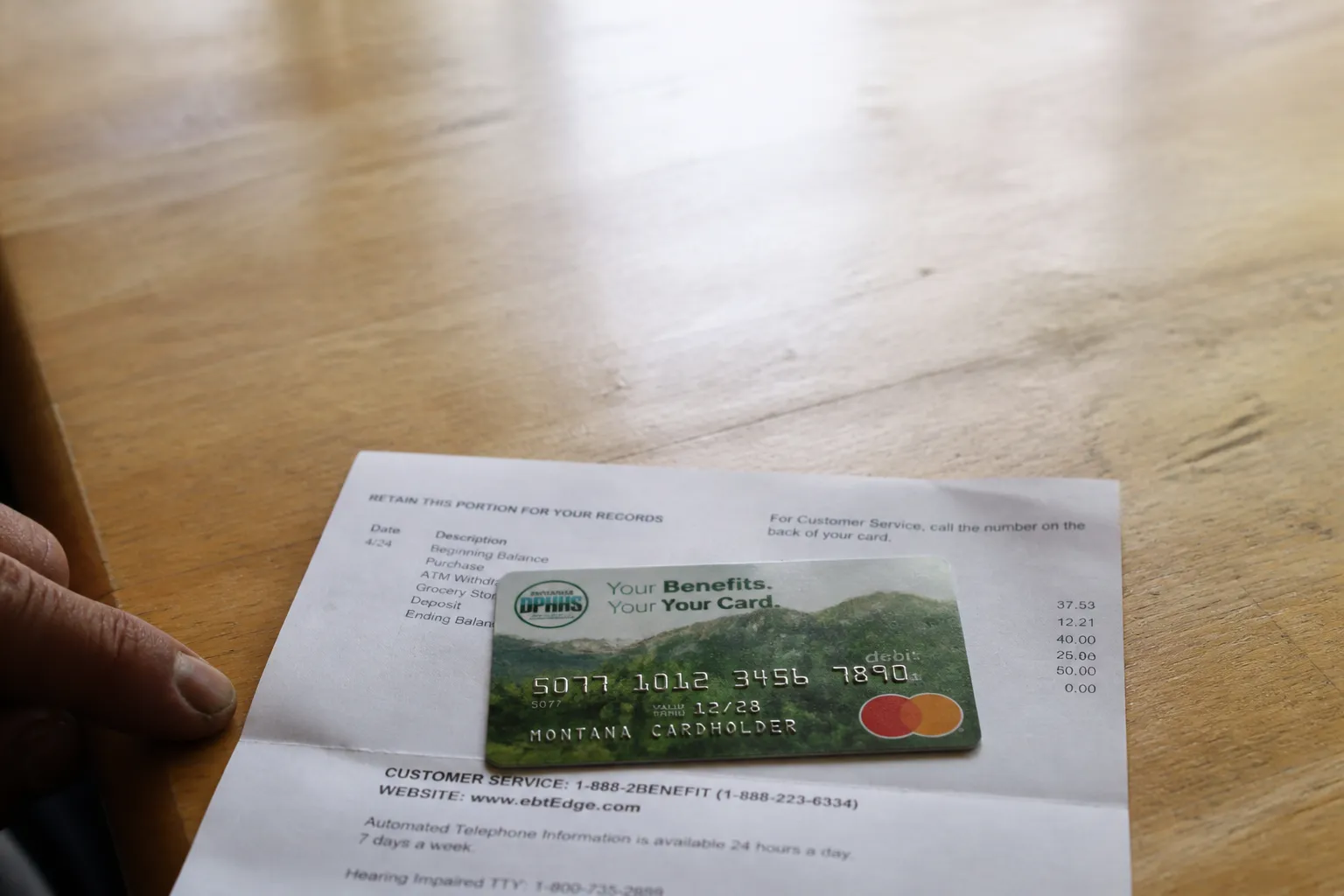
Known formally as a government benefit card, this tool is established through a master contract between a government agency and a commercial financial institution. Each disbursement cycle, the agency deposits the approved benefit amount onto the card balance, where the recipient can spend it or make cash withdrawals. Because the funds sit with a third-party card issuer chosen by the state, the terms governing fee schedules, balance checks, and administrative support are set by that agreement rather than an account agreement you negotiated directly.
During economic downturns, these payment systems handle enormous transaction volumes. Nearly 72 million initial unemployment claims were filed during 2020 at the height of the COVID-19 pandemic, with almost 34 million filed in one quarter alone. Even in calmer economic periods, the scale remains large; approximately 12 million claims were submitted in 2023. Given the sheer volume of money moving through these systems, understanding your rights under federal law is critical to preserving your family's temporary safety net.
Federal standards provide meaningful guardrails for cardholders, but those safeguards are not identical across every type of payment or card structure. Knowing how federal regulations apply, which fees can erode your balance, and what alternatives your state agency must provide can help protect your financial stability while you look for your next job.
Which federal protections may apply
Federal law establishes specific disclosures and basic protections against unauthorized charges, lost cards, and mechanical errors for certain prepaid accounts. However, not every card disbursed by a government entity is automatically treated the same way. Coverage depends largely on how the underlying account is classified under the Electronic Fund Transfer Act and its implementing rule, Regulation E.
Under Regulation E, prepaid accounts that qualify as government benefit accounts generally receive vital procedural safeguards. If an account is covered, the financial institution must establish an error resolution procedure. This mechanism requires the card issuer to investigate disputed transactions in a timely manner. It also sets caps on consumer liability for fraudulent charges, provided the cardholder reports the unauthorized activity within required timeframes, and guarantees basic methods for checking transaction history without hidden penalties.
Federal law also restricts how these programs are mandated. Section 913 of the Electronic Fund Transfer Act explicitly states that no person may require a consumer to establish an account with a specific financial institution as a condition of receiving a government benefit. The Consumer Financial Protection Bureau reinforced this requirement in Compliance Bulletin 2022-02, issued on February 15, 2022, confirming that the mandatory account prohibition applies directly to government benefit accounts.
Regulatory boundaries can still face legal challenges in specific contexts. For instance, in an amicus brief filed in 2023, the CFPB argued that Regulation E covers pandemic unemployment assistance benefits loaded onto prepaid cards because they function as government benefit accounts. The brief noted that while Regulation E excludes accounts funded exclusively by qualified disaster relief payments, standard unemployment relief does not lose its protections merely because it is paid during an emergency. The legal materials available do not detail how the court ultimately resolved that specific dispute, highlighting the importance of verifying your card's individual regulatory classification.
How fees and card choice affect recipients
Even when cards carry basic legal protections, the cost of accessing your money can vary widely depending on the provider contract. Many government benefit cards charge fees for ordinary transactions. The CFPB has pointed out that cardholders may face out-of-network ATM surcharges, charges for balance inquiries, denied transaction penalties, fees for one-time bill payments, and even fees to speak with a customer service representative.
To curb these costs, the Department of Labor issued a revised Unemployment Insurance Program Letter in June 2024. This federal guidance instructs state workforce agencies to negotiate contracts that minimize or completely eliminate routine fees for benefit recipients. The guidance emphasizes that states should avoid entering into revenue-sharing arrangements with card vendors. Instead, agencies are instructed to select financial partners based strictly on high service quality and low cost to the worker.
Most importantly, federal guidance makes clear that workers should not be forced into a single payment method. Depending on the state program, recipients may receive benefits through direct deposit into an existing personal bank account, onto a personal prepaid card of their own choosing, or through a state-administered debit card. Department of Labor guidance establishes that states must provide at least one accessible alternative to a prepaid card, which is typically a direct deposit to an established bank account or a mailed paper check.
Questions to ask and points to check
Before spending from a state-issued benefit card, taking a few minutes to review the paperwork can prevent unexpected losses. You can protect your benefits by walking through several straightforward checks:
- Ask about alternative delivery methods: Check your state agency portal to see if you can select direct deposit to your own account or request a paper check if you prefer to avoid third-party card administration.
- Review the cardholder agreement: The paperwork that arrives with your card lists specific limits on free ATM withdrawals per month, network rules, customer service fees, and exact instructions for error reporting. The CFPB also maintains a public database where prepaid card issuers are required to submit their standard account agreements.
- Identify the fee structure: Determine which ATMs are in-network to avoid surcharges, and check whether balance inquiries via phone or automated text cost money.
- Verify coverage status: Confirm whether the card is formally designated as a government benefit account under federal rules, which establishes your legal rights if an unauthorized transfer occurs.
Warning signs and information gaps
There are clear warning signs that warrant closer inspection or a formal inquiry with your state workforce agency. The most significant red flag is an agency that mandates the use of a state-selected debit card without offering any other payment method. Federal guidance prohibits states from forcing workers into a single commercial institution. Another concern involves excessive fee deductions for basic tasks, such as balance inquiries, customer service calls, or cash withdrawals, which pull vital resources away from households navigating job loss.
While federal frameworks establish important standards, notable gaps remain in publicly available administrative details. Current source records do not outline the exact fee schedules or card options for all fifty states, as these terms depend entirely on individual state contracts. Additionally, available regulatory guidance does not specify uniform dispute filing deadlines, provide exact step-by-step procedures for requesting replacement cards, or address the specific protections available if a private card issuer were to face financial insolvency.
Because these administrative details are governed by contract terms and state rules, recipients should immediately review the printed disclosures enclosed with their physical card. If you suspect your account has been subjected to unlawful fees or if an issuer fails to investigate disputed transactions, you can consult official resources such as the CFPB or the Federal Trade Commission for guidance on how to submit an inquiry or file a consumer complaint.
Please seek a professional. This article is general information, not financial, tax or insurance advice. Please seek a licensed financial, tax or insurance professional about your own situation.


