 Credit Score Education
 Credit Reporting & Consumer Rights
 Personal Finance Tips
 Budgeting & Money Management
 Identity Theft & Fraud Prevention
 Credit Card Education
 Consumer Financial News
 Cost of Living & Inflation
 Banking & Savings Education
 Consumer Protection & Financial Literacy

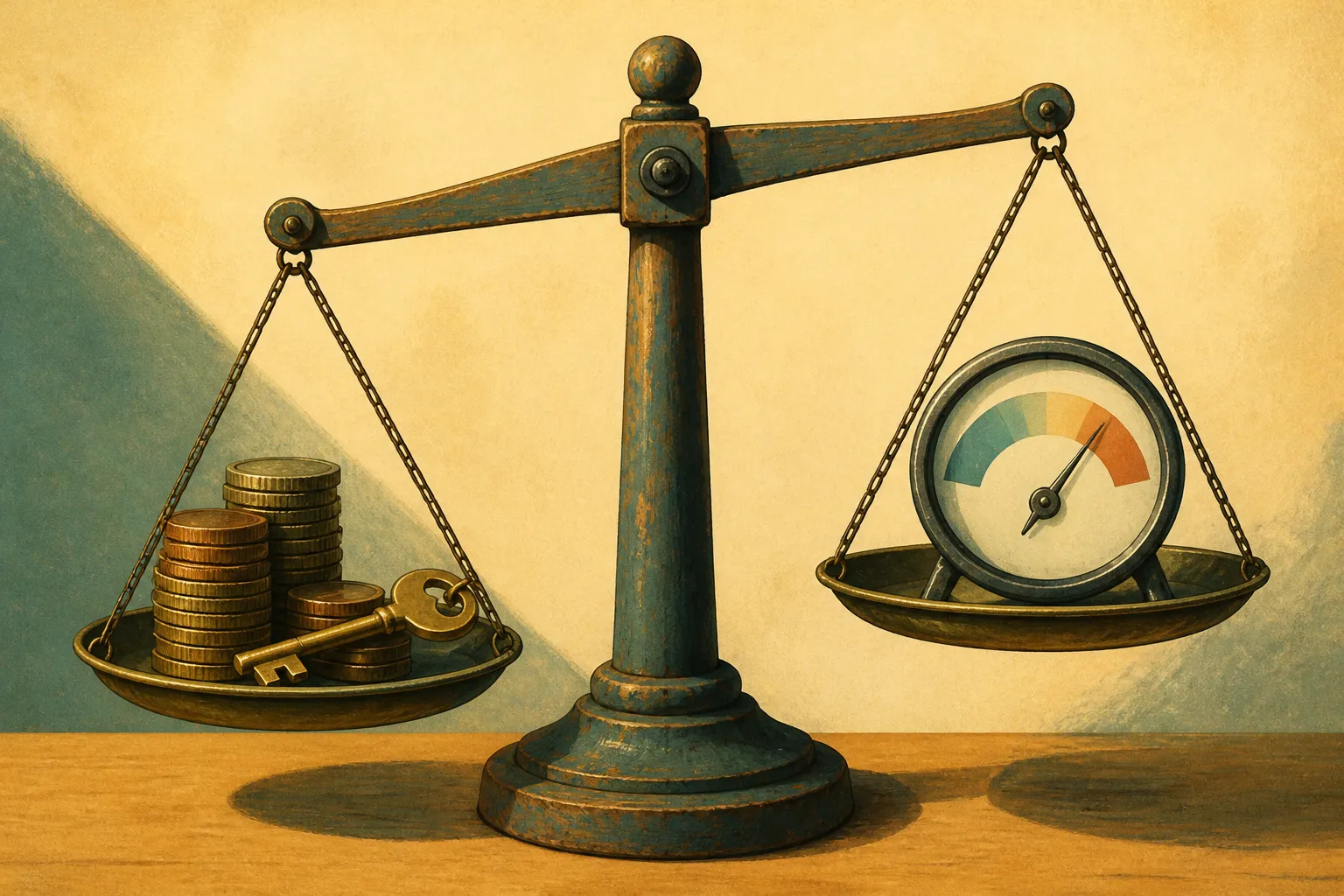
Every time the rate headlines heat up, the words "fixed" and "variable" get thrown around like everyone already knows what they mean for their own wallet. They don't quite mean the same thing on a mortgage as they do on a credit card, and the fine print does a lot of the real work. Here is what each term actually promises, and what it doesn't.
Fixed rates stay put, but the terms still matter
A fixed-rate mortgage locks in its interest rate at closing, and that rate does not move for the life of the loan. That is the whole pitch, and for a lot of borrowers it is enough: the principal and interest portion of the payment stays the same whether the broader market goes up, down, or sideways.
Credit cards use the word "fixed" more loosely. A fixed APR on a card does not track an index the way a variable rate does, but fixed does not mean frozen forever. The issuer generally has to notify you before changing it, and in most cases a higher rate can only apply to purchases and transactions made after you get that notice, according to the Consumer Financial Protection Bureau. The cardholder agreement spells out the specific conditions, and if you can't find it online, you can ask the issuer for a copy.
Variable rates follow an index
Variable rates are built differently. They are tied to an index, often the prime rate published in the Wall Street Journal, and as that index moves with market conditions, your rate moves with it. Adjustable-rate mortgages, credit cards, and home equity lines of credit all commonly use variable pricing.
When the prime rate climbs, a variable APR tied to it climbs too. When prime falls, the rate can fall as well. How often that actually happens, and by how much, depends entirely on the terms written into your specific agreement. For an adjustable-rate mortgage, the new rate after an adjustment is typically the index value plus a margin, a fixed number of percentage points the lender adds on top, and that total is usually kept inside caps that limit how far it can swing.
Here is a quick scorecard before we get to the part that actually changes your payment:
- Fixed rate: set once, does not track an index, but a card's fixed APR can still change with notice.
- Variable rate: tied to an index like the prime rate, moves as the index moves.
- Margin: the extra percentage points a lender adds to the index on an ARM.
- Cap: the ceiling, or sometimes floor, that limits how much a variable rate can move.

What an ARM's introductory period and caps mean for payments
Many adjustable-rate mortgages open with a lower rate than a comparable fixed-rate loan. That introductory rate might hold for a few months, a year, or several years, depending on the product. A 7/6 ARM, for example, keeps its starting rate for the first seven years before it begins adjusting on a set schedule.
Once the introductory period ends, the rate starts changing at regular intervals, and the CFPB notes the payment is likely to rise. When the index goes up, the payment usually follows. When the index goes down, the payment sometimes drops too, but not always, since that depends on how the specific loan is structured. Assuming a rate cut automatically means a lower bill is one of the more common ways people get surprised by their own mortgage.
- Ask how the loan adjusts and when the first change happens.
- Ask which index is used and what the margin is.
- Ask what caps apply to the first adjustment, later adjustments, and the life of the loan.
Questions to ask before rates move
None of this is abstract once a loan is actually adjusting. Before signing onto a variable-rate product, it is worth asking the lender directly how the adjustment works, which index applies, what the margin is, and what the caps look like at each stage. Those answers, not the headline rate at closing, tell you what the loan could cost later.
The CFPB flags two warning signs worth taking seriously. One is counting on selling the home or refinancing before the rate adjusts, since home values and personal finances can both shift in ways nobody plans for. The other is taking on a loan whose adjusted payment would be a stretch on your current income. If that second one sounds familiar, the CFPB suggests it may be worth considering a different loan altogether.
Reading the next rate headline
Rate news tends to flatten all of this into one number, as if every borrower with a variable rate feels the same change the same day. In practice, the index, the margin, the caps, and the adjustment schedule all sit between the headline and your actual bill. Pulling your loan agreement or cardholder agreement and checking those four things is a more reliable guide than any single news alert. For general guidance on comparing loan terms or understanding your rights as a borrower, the CFPB and FTC both publish consumer-facing explainers worth bookmarking before the next rate story hits the feed.
Please seek a professional. This article is general information, not financial, tax or insurance advice. Please seek a licensed financial, tax or insurance professional about your own situation.


