 Credit Score Education
 Credit Reporting & Consumer Rights
 Personal Finance Tips
 Budgeting & Money Management
 Identity Theft & Fraud Prevention
 Credit Card Education
 Consumer Financial News
 Cost of Living & Inflation
 Banking & Savings Education
 Consumer Protection & Financial Literacy


When an unexpected delinquency or collection record appears in your credit history, looking for a way to erase the mark is a normal reaction. The credit reporting system, however, operates on verifiable data rather than personal preference. Under federal rules, accurate negative information generally cannot be removed from a credit report simply because it looks unfavorable or lowers your score.
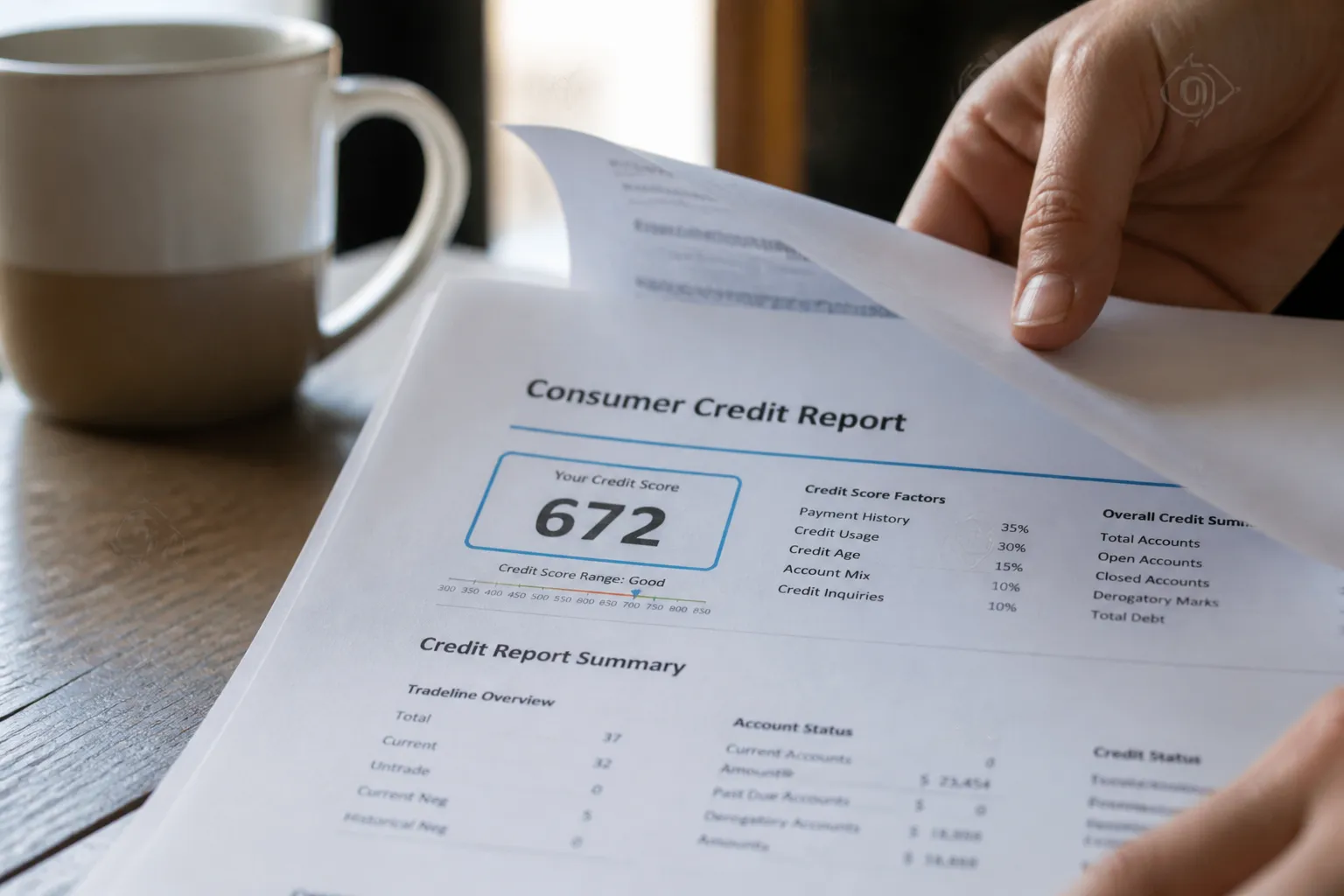
The Consumer Financial Protection Bureau (CFPB) clarifies that dispute procedures exist to correct verifiable errors, not to scrub legitimate records of late payments, defaults, or charge-offs. If a creditor accurately reports that an installment payment was missed by thirty days or more, that notation is a factual entry. Credit reporting agencies have a statutory duty to maintain complete and accurate records, which means correct entries stay in place regardless of how distressing they may be.
Understanding this boundary is essential when evaluating credit repair solicitations. When third-party services claim they possess private legal methods or regulatory loopholes to erase valid payment histories, their promises directly contradict the federal framework. Disputing legitimate records repeatedly does not force permanent deletion, and accurate negative entries remain part of the public credit record until the statutory reporting window closes.
What Accurate Negative Information Means
In credit reporting, an accurate negative item is any derogatory mark that truthfully reflects your account history. Common examples include missed credit card payments, accounts transferred to collections, repossessions, and settled accounts where less than the full balance was paid. If the balance, payment date, and delinquent status match the records held by the lender, the entry meets the definition of an accurate record.
Dispute mechanisms established by federal law are designed specifically to challenge errors, misattributed accounts, or fraudulent charges. They are not intended to serve as an eraser for past financial difficulties. When consumers file disputes claiming an accurate late payment is invalid simply in the hope that the lender fails to respond, the item is routinely confirmed and remains on the file once verified by the furnisher.
How Long Negative Items Stay on a Report
Negative account payment history can generally be reported for up to seven years. As outlined in CFPB guidance on credit report timelines, this seven-year window serves as the standard retention benchmark for late payments, charge-offs, and collection accounts. The countdown for delinquent accounts typically begins on the date of the first delinquency that led to the adverse status, rather than the date a collection agency acquired the debt.
Certain categories of records may remain visible for longer periods. The CFPB notes that exceptions exist under federal law where specific records stay beyond seven years, depending on the legal nature of the filing or judgment. For detailed determinations regarding complex public records, reviewing agency documentation directly is recommended. In contrast, positive payment history may remain on a credit report for longer than seven years. Closed accounts in good standing often continue appearing indefinitely, providing a historical record of accounts managed according to their original agreements.
When You Can Dispute an Item
Consumers possess an enforceable legal right to challenge any information that is incomplete, inaccurate, or improperly attributed. Credit reporting companies must follow reasonable procedures to assure maximum possible accuracy of the records they maintain. When an error is identified, filing a dispute initiates an investigation process that furnishers and bureaus must usually complete within 30 days, at no cost to the consumer.
Disputable entries extend beyond simple typographical errors. Under federal guidelines, you can legitimately dispute records in several specific scenarios:
- Information that appears multiple times on the same credit report, such as a single delinquent account listed more than once by different entities.
- Negative payment entries that arose as a result of documented identity theft or unauthorized account creation.
- Accounts, judgments, or collection records that belong to an individual with a similar name or Social Security number.
- Inaccurate account dates, incorrect current balances, or closed accounts misclassified as open delinquencies.
When disputing an error, the CFPB advises contacting both the credit reporting company displaying the mark and the furnisher that supplied the data. The agency guidance on disputing errors on credit reports emphasizes that alerting both parties ensures the entity maintaining the primary account files investigates its internal ledger at the same time the bureau evaluates the entry.
How to Recognize a Credit Repair Scam
Because negative credit entries create genuine anxiety, predatory companies often target consumers who are searching for rapid ways to clean their records. The Federal Trade Commission (FTC) warns that only scammers claim they can remove all negative information from a credit report. A business that promises to wipe away accurate, current negative history is making representations that violate consumer protection standards.
Legitimate organizations cannot charge upfront fees to remove valid entries. Any company that demands payment before performing any work, advises you to dispute accurate items under false pretenses, or instructs you to establish a new credit identity using an alternate identification number is engaging in deceptive practices. Consumers should remember that disputing inaccurate records with bureaus is always free under federal law, meaning you never need to pay an intermediary to assert your statutory dispute rights.
Practical Steps and Review Questions
Before deciding how to address a negative mark on your credit report, taking an objective inventory of the underlying data helps prevent wasted effort. Consider the following questions when reviewing your reports from the nationwide credit bureaus:
- Is the negative entry factually correct, or does it contain verifiable inaccuracies regarding late dates, balance amounts, or payment status?
- Does the debt appear more than once across your files, or is it attributed to an account you never opened?
- How long has the entry been present on the file? If a legitimate delinquency is nearing the end of its seven-year window, it will age off automatically under federal rules.
If you encounter an uncorrected error after completing the standard dispute process, official consumer channels remain available. The CFPB accepts consumer complaints regarding credit reporting bureaus and furnishers, forwarding the issue directly to the company to secure an official response. For situations involving accurate marks where you have a long record of timely payments, consumers sometimes explore goodwill letters. As discussed in industry guides published by credit bureaus like Experian, a goodwill letter is an informal request asking an original creditor to remove a negative entry as a courtesy. Creditors have no legal obligation to grant these requests, and outcomes vary widely based on individual creditor policy.
Please seek a professional. This article is general information, not financial, tax or insurance advice. Please seek a licensed financial, tax or insurance professional about your own situation.


