 Credit Score Education
 Credit Reporting & Consumer Rights
 Personal Finance Tips
 Budgeting & Money Management
 Identity Theft & Fraud Prevention
 Credit Card Education
 Consumer Financial News
 Cost of Living & Inflation
 Banking & Savings Education
 Consumer Protection & Financial Literacy


Your first lease can look affordable until the bills arrive. To build a useful budget, separate the advertised rent from other recurring charges, identify how utilities are billed, and put each due date on a calendar. The sources cited here do not provide a standard first-apartment budget or cover every move-in cost, so treat the list below as a way to gather the numbers you need, not as a spending rule.
- Write down the base rent. Record the monthly amount in the listing and compare it with the amount stated in the lease.
- Add recurring lease charges. Ask for an itemized list of fees and note which are monthly, one-time, or conditional. Do not assume that an advertised rent figure includes every charge.
- List the utilities you may pay. Note which services are included in rent, which are billed by a utility provider, and which may be passed through by the property manager.
- Mark costs the available sources do not cover. Ask about deposits, application and move-in charges, renters insurance, and utility setup fees. The sources cited here do not provide typical amounts for these private-rental costs.

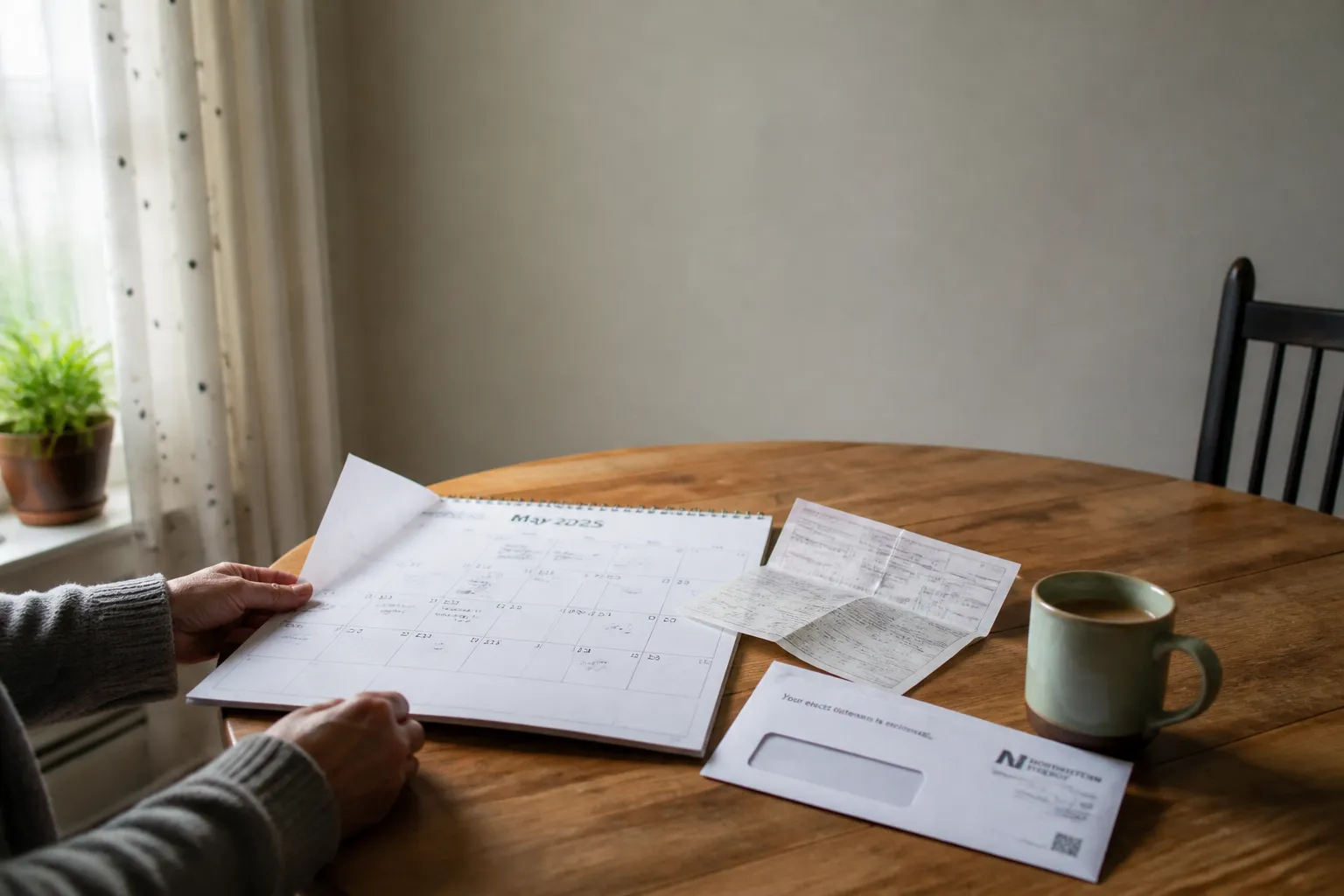
- Turn each amount into a date. Put rent, recurring fees, and expected utility bills on a monthly calendar, using the due dates in the lease or provider information.
- Mark what is confirmed and what is estimated. Keep written lease amounts separate from utility estimates and charges you still need to ask about.
- Compare the total with your available cash flow. Use your own income and other bill dates to see what remains after housing costs. The sources do not set a recommended share of income for a private lease.
Advertised rent is a starting figure, not the whole bill
Before comparing apartments, ask what the advertised rent includes and whether the lease adds recurring charges. A rent figure can be misleading if it does not reflect what a renter actually has to pay. In a case brought by the Federal Trade Commission and Colorado, a large property management firm agreed to pay $24 million and change its practices after allegations about deceptive rent-price advertising. The FTC’s announcement describes the case and settlement, but it does not tell you what any other landlord will charge.
Ask for the full list of charges tied to the lease and request the answer in writing. Separate recurring fees from one-time charges, and ask when each is due. A written itemization can help you compare the lease with the listing and later check bills against what you were told. If a total differs from the advertised figure, ask for an explanation before signing. This is a cost-checking step, not a conclusion that a particular charge is unlawful.
Find out how utilities are metered and billed
Utilities can arrive as separate bills, as charges passed through by the property manager, or as services included in rent. Ask which arrangement applies to electricity, gas, water, heat, and any other service the apartment uses. Also ask whether the unit is individually metered, check-metered, or part of a master meter. Those terms describe how usage is measured and can affect how costs are assigned.
HUD explains that utility allowances are used in public housing programs for check-metered or individually metered utilities, but not for master-metered utilities. The allowances are estimates and can range from less than $10 to more than $200 per household per month, depending on the housing agency, covered utilities and uses, and unit or household size. That range is specific to HUD’s public-housing materials. It is not a reliable estimate for a private apartment or a promise of what a landlord will deduct. HUD’s utility allowance information also describes covered uses such as heating, cooling, lighting, refrigeration, and appliances, and says telephone service is not included.
For your own calendar, list each service separately and note who bills you, when payment is due, and whether the amount is known or still an estimate. If the property manager cannot give you an exact utility amount, ask what information is available about billing and metering. A prior bill or usage estimate may help with planning, but it can differ from your costs as seasons and household habits change.
Make the due dates visible before the lease starts
A monthly total is only part of the picture. Several bills can fall close together, and a one-time charge may be due before the first rent payment. Put confirmed due dates on a calendar and mark uncertain dates as questions to resolve. Include the rent due date, recurring lease charges, utility payment dates, and the dates for costs the landlord or service providers identify. This turns a collection of prices into a cash-flow picture without assuming that every month will look the same.
Do not treat the familiar 30 percent figure as a universal private-rental budget rule. HUD describes a 30 percent adjusted-income rent share in the context of federally assisted public housing, where reasonable utility costs are counted as part of rent. That program rule does not establish what a private renter should spend. The available sources do not provide a standard share of take-home pay for a first apartment, so the comparison has to use your own income, other bills, and confirmed housing costs.
If a rent or utility bill becomes hard to pay
Local programs may offer help with rent and other bills. The Consumer Financial Protection Bureau says state, tribal, and local organizations distribute assistance, and recommends starting with local organizations. You can search for programs by town, county, or state, or ask local government offices, a library, or a cultural center where to look. The CFPB also says 211 may help identify rent and utility resources, and housing counselors may help locate programs in your area.
For utility-bill assistance, the CFPB lists the National Energy Assistance Referral Hotline at (866) 674-6327 and notes that LIHEAP offices can help year-round. Assistance is not necessarily immediate: the CFPB says it may take several weeks to receive funds after applying. The CFPB’s renter assistance page has additional ways to find local resources. Checking options before a bill is due may give you more time to learn about eligibility and application timing.
Know what the sources do not settle
The available guidance does not give a complete first-apartment budget, typical private-rental utility bills, or standard amounts for deposits, application fees, move-in costs, renters insurance, and utility setup. It also does not determine whether a particular fee is permitted under a lease or local rules. The FTC has published guidance for rental property managers about lessons from its Greystar lawsuit, but that material is written for managers rather than as a renter’s guide. The FTC guidance can provide context about the case, while questions about a specific lease may require information from local housing or consumer protection offices.
Before committing, keep a record of the advertised rent, the itemized charges, utility billing arrangements, and due dates you were given. Then compare that record with the lease and fill in any missing amounts directly with the property manager or service providers. This article is educational and does not replace personal financial, legal, or tax advice.
Please seek a professional. This article is general information, not financial, tax or insurance advice. Please seek a licensed financial, tax or insurance professional about your own situation.