 Credit Score Education
 Credit Reporting & Consumer Rights
 Personal Finance Tips
 Budgeting & Money Management
 Identity Theft & Fraud Prevention
 Credit Card Education
 Consumer Financial News
 Cost of Living & Inflation
 Banking & Savings Education
 Consumer Protection & Financial Literacy

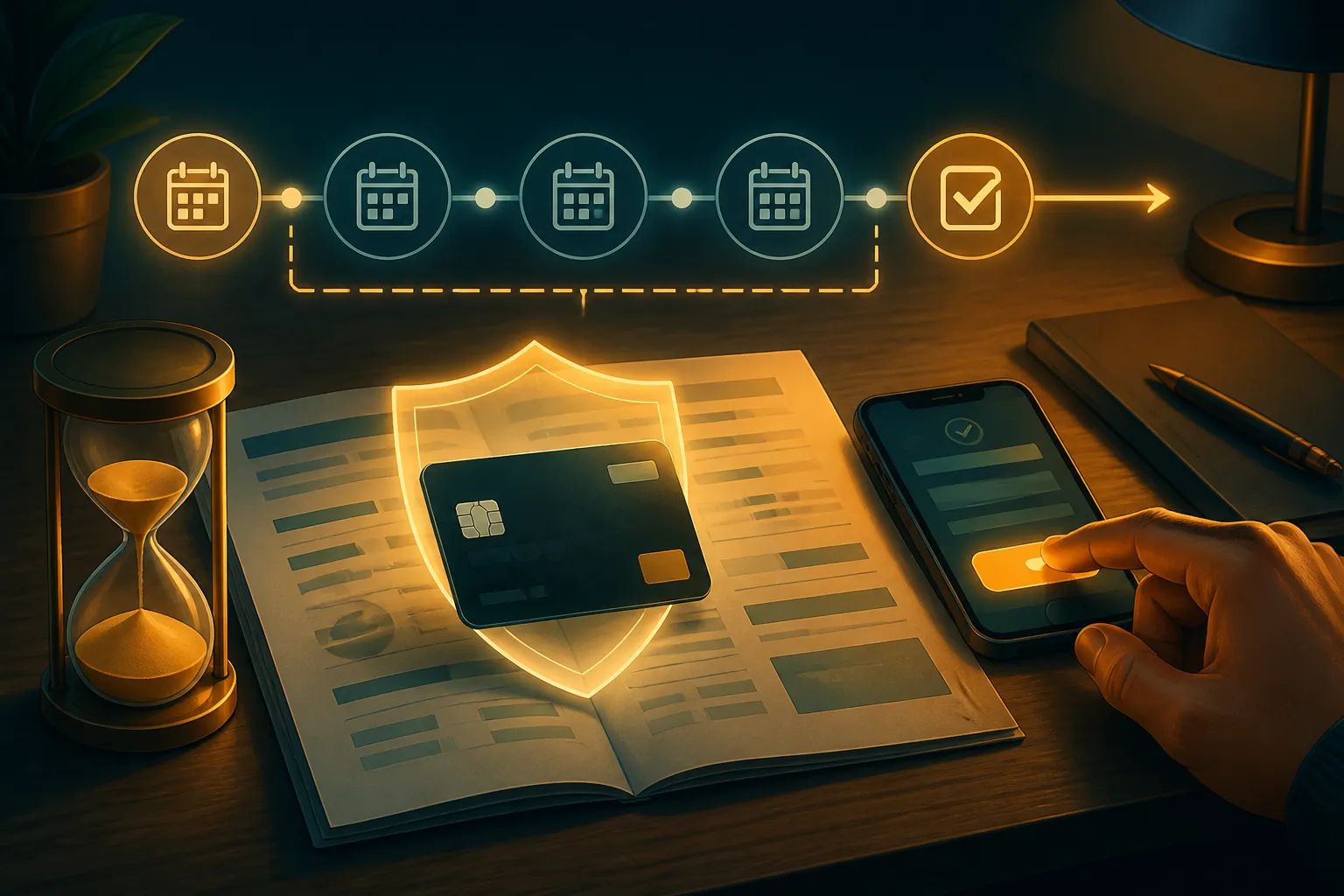
Many cardholders assume that interest begins accumulating the moment a card is swiped at a store register. In reality, credit card agreements often include a buffer window that allows you to avoid interest entirely on new purchases, provided you follow specific payment rules. Understanding how this buffer works helps clarify why small timing differences on a monthly billing statement can lead to unexpected finance charges.
What a grace period is
The period between the closing date of a billing cycle and your payment due date is known as a grace period. According to guidelines from the Consumer Financial Protection Bureau, paying your full statement balance by that due date generally prevents interest from accruing on eligible purchases made during that billing cycle. This mechanism allows consumers to use credit for everyday spending without paying extra finance charges, as long as the full balance is cleared on time.
Federal law does not require credit card companies to offer a grace period on consumer accounts. Most major issuers choose to provide one for standard purchases to remain competitive, but because it is a feature rather than a legal mandate, terms can vary. Disclosure rules under federal regulations such as Regulation Z require card issuers to explicitly state whether a grace period applies to your account. Checking the summary table on your monthly statement or reading your cardholder agreement is the best way to verify your card's specific policy.
In practice, a typical grace period spans roughly 21 to 25 days. Rather than treating this timeframe as a fixed rule, view it as a moving window tied to your specific billing cycle. The exact number of days can fluctuate slightly depending on the length of the month and how your issuer sets its calendar dates.
How the statement balance and due date fit together
A common point of confusion involves the difference between your current account balance and your official statement balance. A grace period relies entirely on the statement balance calculated at the close of your billing cycle. Paying that full statement balance before or on the due date preserves your interest-free status. Paying only a portion of the statement balance, or submitting your payment after the due date, can immediately change how interest is applied.
Federal regulations mandate that card issuers establish reasonable procedures to mail or deliver billing statements at least 21 days before the payment due date. This requirement is designed to ensure cardholders have sufficient time to review their charges and organize payment. However, receiving the bill on time is only part of the process. Cardholders must actively track both the billing cycle closing date and the payment due date printed on the statement.
Because individual card issuers set billing cycles independently, two people holding the same card product may have entirely different billing schedules. One account might close on the 5th of each month with a due date on the 26th, while another closes on the 18th. Reviewing your monthly statement when it arrives remains the most reliable way to monitor when your payment window opens and closes.

Purchases, cash advances, and what can lose the grace period
Grace periods typically apply only to standard purchase transactions. Other types of account activity operate under different rules. For example, cash advances and convenience checks issued by your card company generally do not receive a grace period. As detailed by the CFPB, interest on cash-like transactions usually begins accruing on the exact day the transaction occurs, regardless of your payment history.
Carrying a balance from one month to the next is the primary reason cardholders lose their grace period. When a balance is carried past the due date, interest-free privileges on new purchases can disappear. When that happens, interest is charged on the remaining unpaid balance and on new purchases starting on the day each transaction is posted. Paying in full during some months but carrying a balance in others may cost you the grace period for the month you carried the balance as well as the following month.
The financial impact of losing a grace period can add up quickly. Industry data highlighted by CBS News noted average credit card interest rates hovering near 22% in recent years. Educational resources on Bankrate also emphasize how interest charges can multiply when the grace period is absent. When daily interest applies to new charges immediately, even minor daily purchases can increase your total balance faster than anticipated.
Questions to ask and habits to check
To determine how your credit card handles interest-free windows, review a few fundamental questions about your account terms:
- Does your credit card agreement provide a grace period on purchases?
- What are the exact billing cycle closing dates and payment due dates listed on your monthly statement?
- Have you paid your full statement balance by the due date for the past two consecutive billing cycles?
Recognizing red flags early can prevent surprise interest charges. One common warning sign is making partial payments that leave a small remaining statement balance, which can eliminate the grace period for the upcoming cycle. Another red flag is using credit card checks or cash advances without realizing that interest starts building immediately on those transactions.
This article is for general educational purposes only and does not constitute personal financial, legal, or tax advice. Account terms and interest calculations vary by card issuer. For questions about your specific account, contact your card issuer directly, and review consumer resources from the Consumer Financial Protection Bureau or the Federal Trade Commission for plain-language guidance on credit rights.
Please seek a professional. This article is general information, not financial, tax or insurance advice. Please seek a licensed financial, tax or insurance professional about your own situation.


