 Credit Score Education
 Credit Reporting & Consumer Rights
 Personal Finance Tips
 Budgeting & Money Management
 Identity Theft & Fraud Prevention
 Credit Card Education
 Consumer Financial News
 Cost of Living & Inflation
 Banking & Savings Education
 Consumer Protection & Financial Literacy

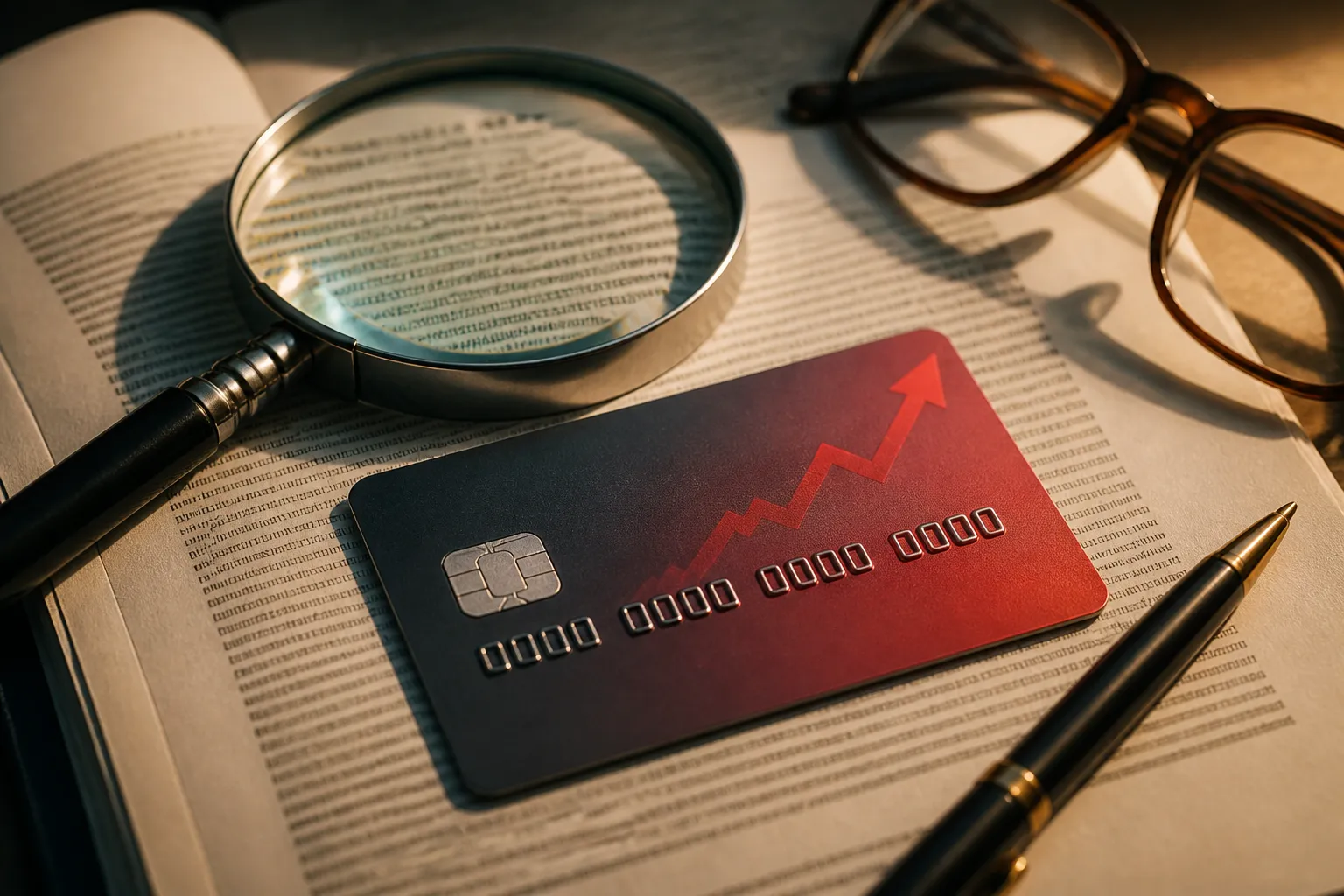
A penalty APR is a higher interest rate a card issuer may apply after you break the terms of your card agreement. The most common way to break them is paying late. The rate is usually a fixed number, and it can be far above what you were paying before. Your card agreement says what triggers it and how high it can go.

What a Penalty APR Is
Many people assume a card's rate only moves with the market or with their credit score. A penalty APR works differently. It is a rate written into the agreement and switched on by your own behavior, such as missing payments. Industry explainers describe it as a higher-than-normal rate that applies for a set period.
There is no standard penalty rate. It varies a lot by card, and not every card has one. As an illustration from one issuer's educational material, a card with a 17.9% purchase APR could move to 27.9%. Treat that as an example, not a typical figure.
The place to look is the Schumer box, the summary table in your card's terms. The CFPB's Know Before You Owe pages explain that card agreements can carry several APRs for different transaction types and time periods. Read the whole table, not just the headline purchase rate.
What Can Trigger One
Late payment is the most common trigger. Issuer materials say a payment more than 30 days late can result in the higher rate. Paying less than the minimum can also count as late.
A returned payment is the one people miss. If a bank transfer bounces for low funds, or a check comes back, or the account used to pay was closed, the issuer may treat it as a violation. You meant to pay. The agreement may not care.
Some issuers also list exceeding the credit limit as a trigger. Check your own agreement for this. Whether it applies to you depends on its wording, so do not assume it does.
Triggers can have a second cost. Some issuers say a penalty event can also mean losing an introductory APR. Ask your issuer whether that applies to your card.
What the Rules Say About Notice and Review
Federal rules in Regulation Z limit how issuers raise rates. The two sections to read are 12 CFR 1026.55 and 12 CFR 1026.59. We could not confirm their full text for this piece, so check the regulation itself before relying on the details below.
In general, issuers must give 45 days' notice before increasing your rate. Issuer materials say the notice lists the new rate and the reason. The rules carry exceptions, and they treat future purchases differently from existing balances. A rate increase on an existing balance is generally allowed only in narrow cases, such as a long-delinquent payment. Do not assume a single late payment lets an issuer reprice what you already owe.
Issuer materials also say that after six months of on-time payments, the issuer must review the account and the rate may return to the standard APR. The word is may. Continued violations can keep the penalty rate in place longer. Section 1026.59 governs these reviews, and it applies to increases that were subject to review.
How to Get Out of It
Start by getting current. Make every payment on time and at least the minimum, and keep the paying account funded. That is the step the sources agree on.
Then read the notice you received. Find the new rate, the stated reason, and the date it takes effect. Compare that against your card agreement.
Next, call the number on the back of the card. The sources do not say what the CFPB recommends here, so this is practical advice, not a rule. You could say something like this:
I received a notice that a penalty APR was applied to my account. I have made on-time payments since then. Can you tell me when my account will be reviewed and what rate I qualify for?
Write down the date, the representative's name, and the answer. If the answer does not match the notice or the agreement, ask for it in writing.
While you wait, a few habits limit the damage:
- Pay the full statement balance if you can. New purchases avoid interest when you do.
- Pay the card from a funded account to avoid returned payments.
- Set automatic payments for at least the minimum, plus a reminder for the due date.
- Note when any promotional APR ends and what rate follows.
If you think the late payment came from a billing error or dispute, the sources here do not cover that. The CFPB's consumer resources are the place to start. Nothing we reviewed says how a penalty APR affects your credit score, so we are not making a claim either way.
Please seek a professional. This article is general information, not financial, tax or insurance advice. Please seek a licensed financial, tax or insurance professional about your own situation.


