 Credit Score Education
 Credit Reporting & Consumer Rights
 Personal Finance Tips
 Budgeting & Money Management
 Identity Theft & Fraud Prevention
 Credit Card Education
 Consumer Financial News
 Cost of Living & Inflation
 Banking & Savings Education
 Consumer Protection & Financial Literacy


When most income arrives in a set amount, a monthly budget can look straightforward until bills land on different dates. Rent may be due before a deposit arrives, while groceries and utilities recur throughout the month. A useful starting point is to list all income and spending, then put the amounts on a calendar. That can reveal timing questions, though the general budgeting sources reviewed here do not explain how to plan around specific benefit schedules or changes.
Start with a complete picture of your income
Begin by listing every source of money that may support the household budget. The Consumer Financial Protection Bureau (CFPB) includes government benefits, child support, self-employment income, and pay from multiple jobs among the sources to record. Adding them together gives a fuller starting figure than looking at only one deposit.
Then compare that income list with spending. The CFPB’s budgeting guidance suggests recording income first and tracking spending separately. Its archived page points readers to an Income Tracker and a Spending Tracker, but the agency warns that archived information may be outdated and some links may not work. The basic order still offers a clear way to organize the numbers: identify what comes in, then record what goes out. Read the CFPB budgeting guidance, and check current CFPB resources before relying on an older tool.
A full month of recordkeeping can feel like a large project. The CFPB guidance suggests starting with one week of expenses if tracking everything at once feels difficult. A short review can show whether common costs are being missed, such as small purchases or bills that do not arrive every month. The aim is to get a usable picture, not to make the first pass perfect.
Sort spending, then put bills on the calendar
Over an average month, group spending into categories such as housing, utilities, eating out, and entertainment. Category totals can show which expenses take the largest share of income and where actual spending differs from what was expected. A notebook, spreadsheet, or phone app can all serve as a record, provided the information is easy to check during the month.
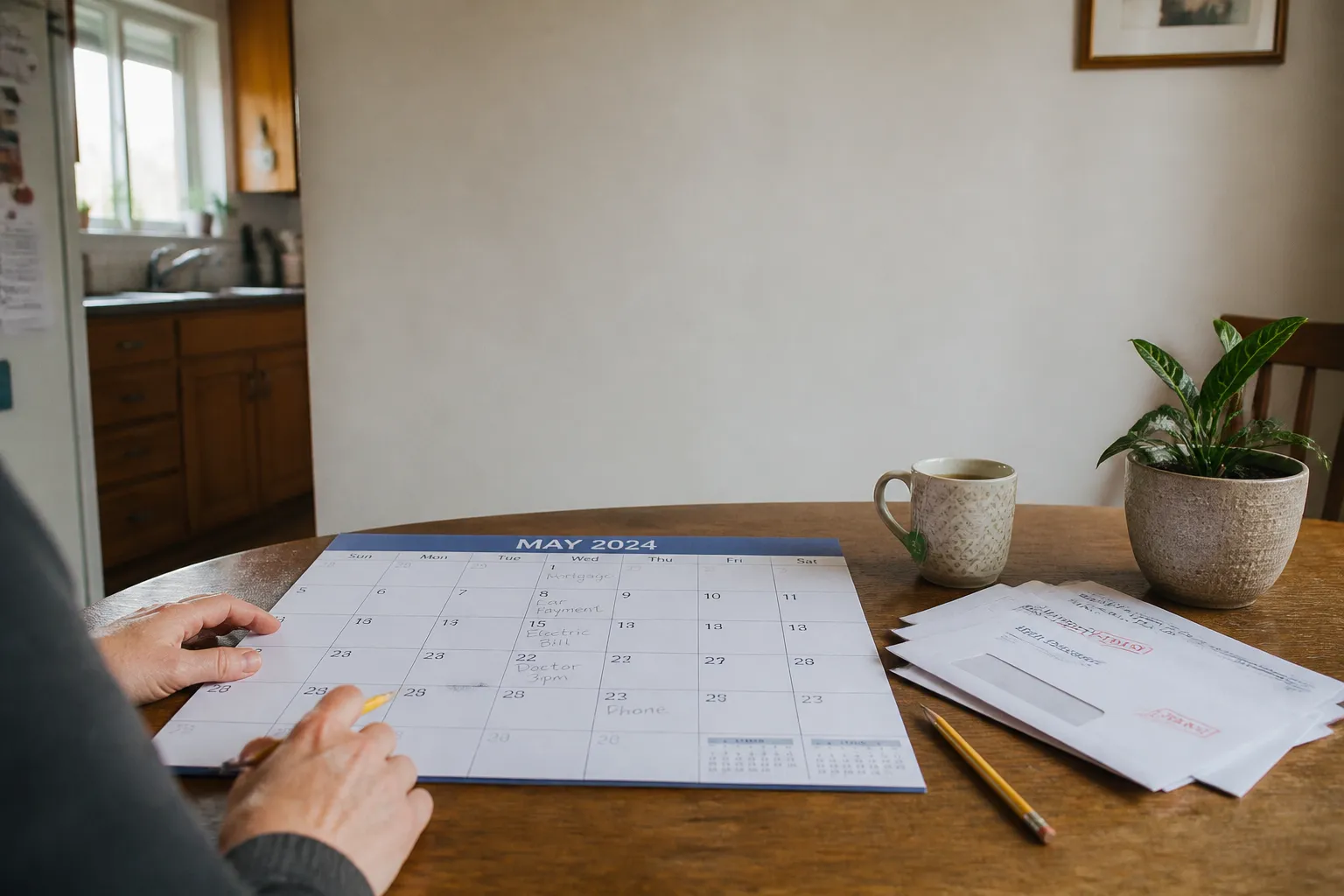
For a household with a known deposit date, placing expected income and bill due dates on the same calendar may make timing easier to see. This is a practical way to apply the general tracking advice, not a benefit-specific method supplied by the sources. A calendar can show, for example, that several payments are due early in the month even if income arrives later. It does not change a due date or establish what a benefit program will pay.
Keep the plan flexible. If a category repeatedly runs short, the budget may need a different estimate or a different allocation among expenses and goals. The Social Security Administration’s Ticket to Work program also describes a budget as a plan that can be adjusted as resources, needs, or goals change. Revising an estimate is part of maintaining the plan. The Social Security budgeting tips also suggest keeping the budget somewhere it can be checked and updated.
Make shopping choices before the moment
A spending plan can be easier to follow when some decisions happen before shopping. The Social Security guidance suggests writing a list before going to a store and including items placed in online carts. A list sets out what the shopper intends to buy before promotions, convenience, or an unplanned need can change the total.
The same guidance notes that shopping while rested and fed may make it easier to stick to a list. These are small habits, not guarantees that spending will match the plan. If an essential item was missed, the list can change. The point is to have a reference for the decision rather than relying on memory at checkout.
Once income and spending are recorded, a household can compare possible goals with the money left after routine costs. The CFPB names goals such as an emergency fund, a car, a down payment, or retirement savings. The comparison is useful because it replaces a guess with a view of actual amounts. It does not mean every goal can be funded at once, especially when income is limited and expenses compete for the same dollars.
Understand what emergency savings can and cannot solve
An emergency fund is money set aside for unplanned costs, such as car or home repairs, medical bills, or a loss of income. These expenses sit outside routine monthly spending, whether the amount is large or small. The CFPB’s guide says that setting aside even a small amount can be a starting point for recovering from an unexpected cost and returning to larger savings goals. See the CFPB emergency fund guide for its current material.
The available text reviewed for this article does not provide an emergency-fund target, a step-by-step saving method, or instructions on where to keep the money. A household’s costs and resources differ, so the sources here do not support a single target for everyone. The CFPB guide lists these as topics, but readers should consult the full, current guide for details rather than treating this article as a complete savings plan.
Know where general budgeting guidance stops
General budgeting steps can help organize income and expenses, but they do not answer program-specific questions. The sources reviewed do not explain how Social Security, Supplemental Security Income, or other benefits are calculated, when a particular payment will arrive, or what happens if an amount changes. For those details, use information from the agency that administers the benefit. The Social Security Administration is the official source for Social Security program information.
The source set also does not provide a full method for handling debt, recurring bills, and savings together on a fixed income. Some pages aimed at older adults from NCOA and AARP were available only as navigation text in the material reviewed, so their specific budgeting guidance could not be assessed here. Avoid treating a general spending tracker as a substitute for current benefit rules or individualized program information.
A grounded first pass is to list all income, record spending by category, and note bill dates alongside expected deposits. That record may help identify a timing gap or an expense that needs a closer look. For current budgeting tools, check the CFPB directly. For benefit eligibility, payment timing, or changes, check with the agency responsible for the benefit.
Please seek a professional. This article is general information, not financial, tax or insurance advice. Please seek a licensed financial, tax or insurance professional about your own situation.


