 Credit Score Education
 Credit Reporting & Consumer Rights
 Personal Finance Tips
 Budgeting & Money Management
 Identity Theft & Fraud Prevention
 Credit Card Education
 Consumer Financial News
 Cost of Living & Inflation
 Banking & Savings Education
 Consumer Protection & Financial Literacy


National inflation reports get the headlines. But a national average rarely matches the total on a grocery receipt in a midsized town. People want a number that fits where they live.
The Bureau of Labor Statistics (BLS) does publish Consumer Price Index figures below the national level. This piece covers what the public BLS pages confirm, what they leave open for smaller metro areas, and how a reader can check the rest without guessing.
What the BLS pages confirm
BLS publishes CPI material at the regional level. Its regional resources page and the Mid-Atlantic CPI overview table are two examples. Regional output is organized by BLS region.
The area definitions have changed before. BLS posted a page on the Consumer Price Index Geographic Revision for 2018, which shows that area revisions happen periodically. Another is on the way. A notice titled 2028 Geographic Revision Notice sits under the 2026 notices path on the BLS site, and its title points to a revision of CPI geographic areas in 2028.
That matters if you compare years. If the lines around an area move, a table from before the change and one from after may not describe the same place.
What the sources do not say
The public copies of these pages are mostly navigation and titles. Their body text was not available for this article. That limits what can be said about three recent notices:
- A Notice of CPI collection reductions, issued in 2025.
- A follow-up, More information on CPI collection reductions.
- An Update regarding data collection for the Consumer Price Index, filed under the 2026 notices.
Their titles show that BLS has changed how much price data it collects. The titles do not say how those changes affect any single area, and they do not say anything about smaller metros in particular.
Other gaps matter just as much. Nothing here defines a semiannual regional release, gives its dates, or says which smaller metro areas are covered on their own. The page on CPI area aggregation is titled to cover how area figures are combined, but its text was not available to us. We cannot say what it concludes. No source here gives a price figure for any metro area, so this article makes no claim about how much prices rose in a smaller city.
How to check an area table yourself
You do not need to wait for anyone to explain the release. Four steps get you most of the way.
- Find the BLS release calendar on bls.gov and look up the CPI entries. Confirm the date for the release you care about instead of relying on a news summary.
- Open the regional resources page and pick your BLS region. Then open the table for that region.
- Read the table header and notes. Look for the name of the area and any definition of what it includes. If your town is not named, assume it is not reported on its own until a BLS page says otherwise.
- Read the BLS area aggregation page in full. It is the one place in this set of sources that is titled to explain how area figures are combined.
Check the table dates as well. If a table spans a year when the area definitions changed, look at the geographic revision pages before you compare it with an older one.
Using the numbers at home
An index figure describes a group of prices across an area. Your household buys a narrower set of things from particular stores. The two can move apart, and nothing in the BLS sources here says how closely they track.
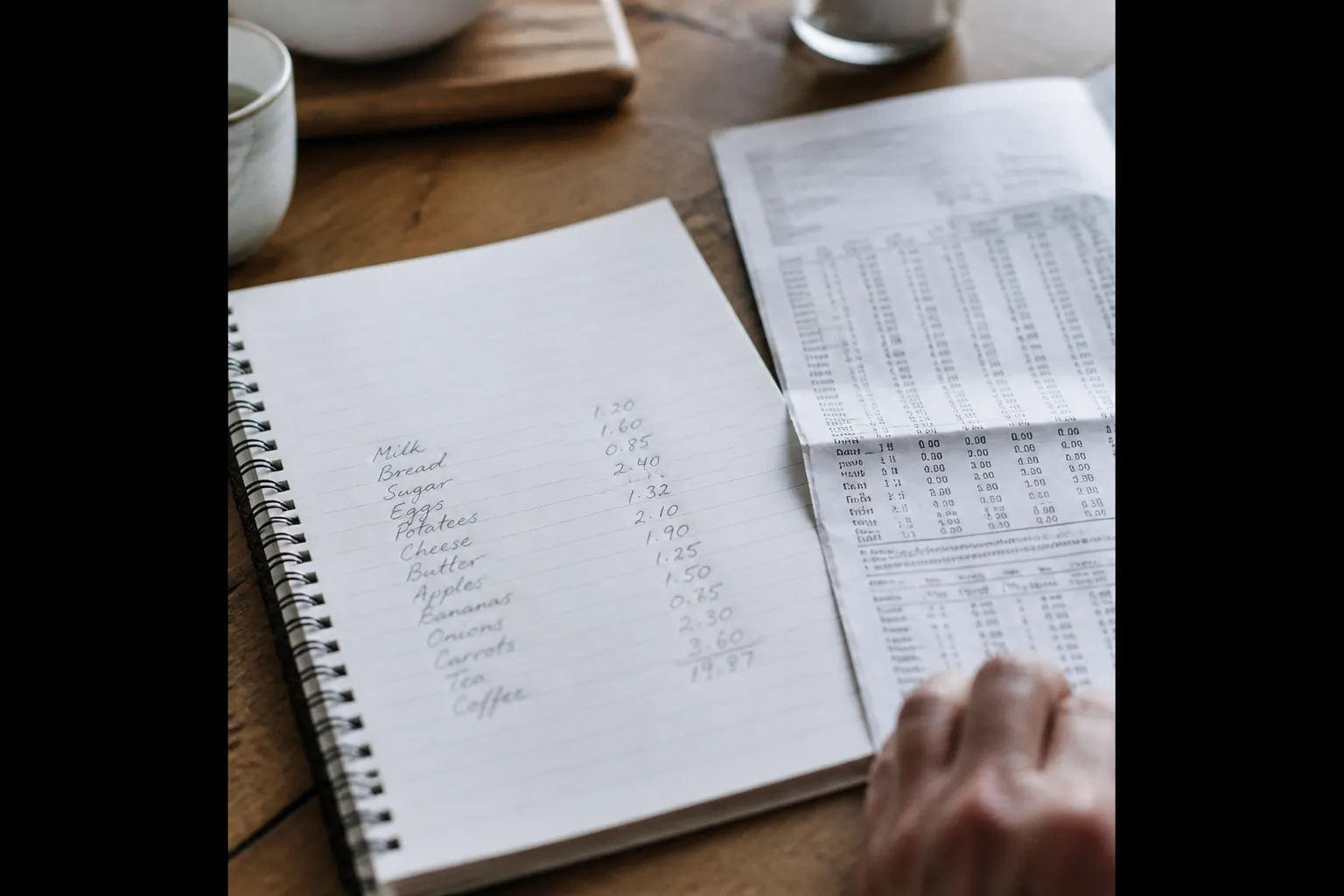
So test the figure against your own records. Pick three months of grocery receipts and total the same staples for each month, such as milk, eggs and bread. Write the totals in a notebook. Then set that change beside the change shown in the regional table for the same months. If they differ, that is not necessarily an error. It may just mean your basket is not the index basket.
This article does not draw on budgeting guidance from consumer agencies, because none was in the source set. For advice on building a household budget, go to the educational pages of an agency like the Consumer Financial Protection Bureau directly. Use the CPI tables for context on regional price movement, and use your receipts for what your own household is paying.