 Credit Score Education
 Credit Reporting & Consumer Rights
 Personal Finance Tips
 Budgeting & Money Management
 Identity Theft & Fraud Prevention
 Credit Card Education
 Consumer Financial News
 Cost of Living & Inflation
 Banking & Savings Education
 Consumer Protection & Financial Literacy

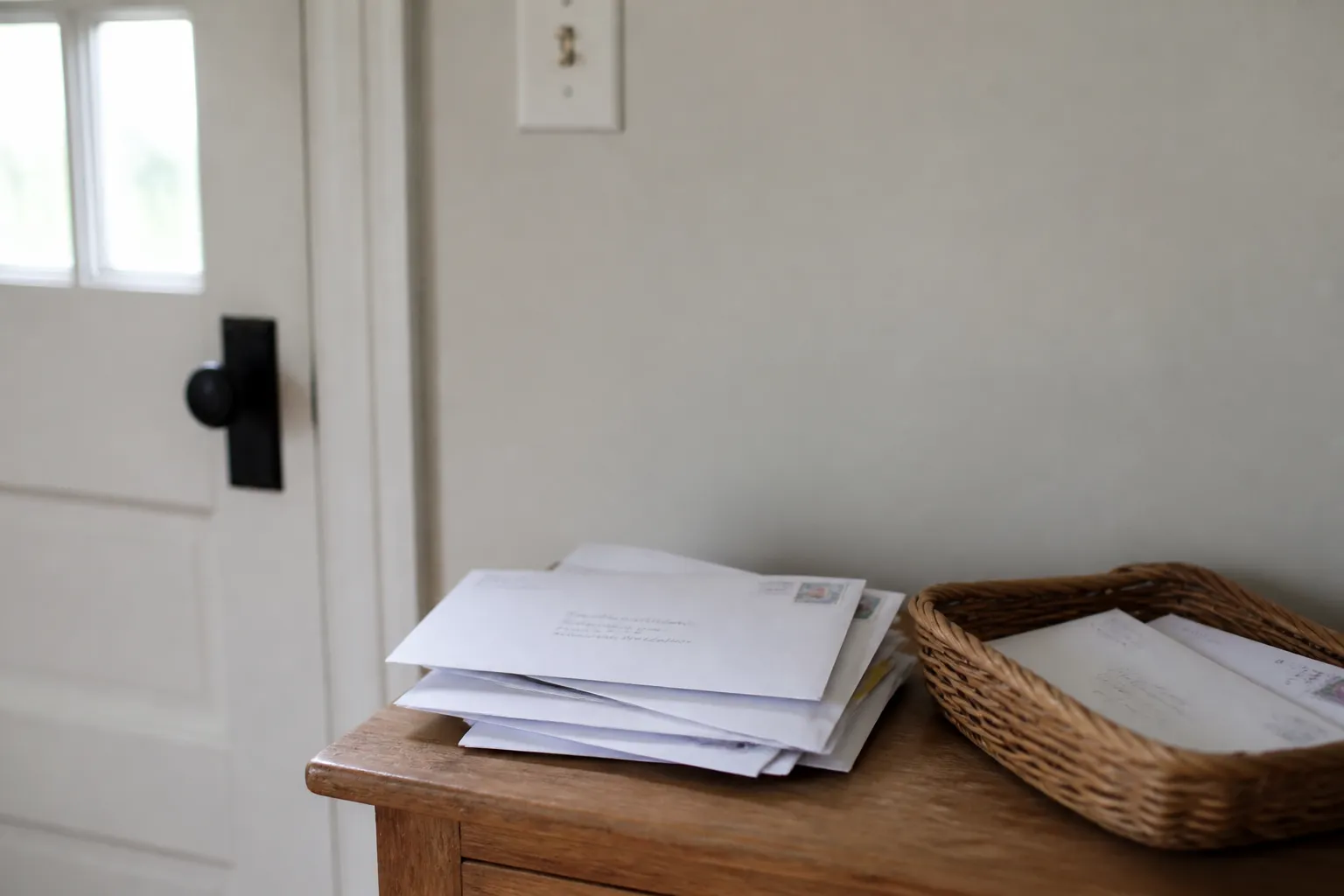
A bill for a former resident can land in your mailbox on the same day you are sorting your own due dates. The address may be outdated, or a letter may simply have been delivered to the wrong box. Either way, keep the envelope closed and route it back through the Postal Service rather than trying to solve the sender’s account record yourself.
- Check the name on the envelope without opening it. If it is for someone else, leave the name, return address, and address visible.
- Write “Not at this address” or “Return to Sender” on the front. You do not need to find the person’s new address.
- Give it to your letter carrier, take it to a Post Office, place it in a blue collection box, or put it back in your mailbox for postal pickup.
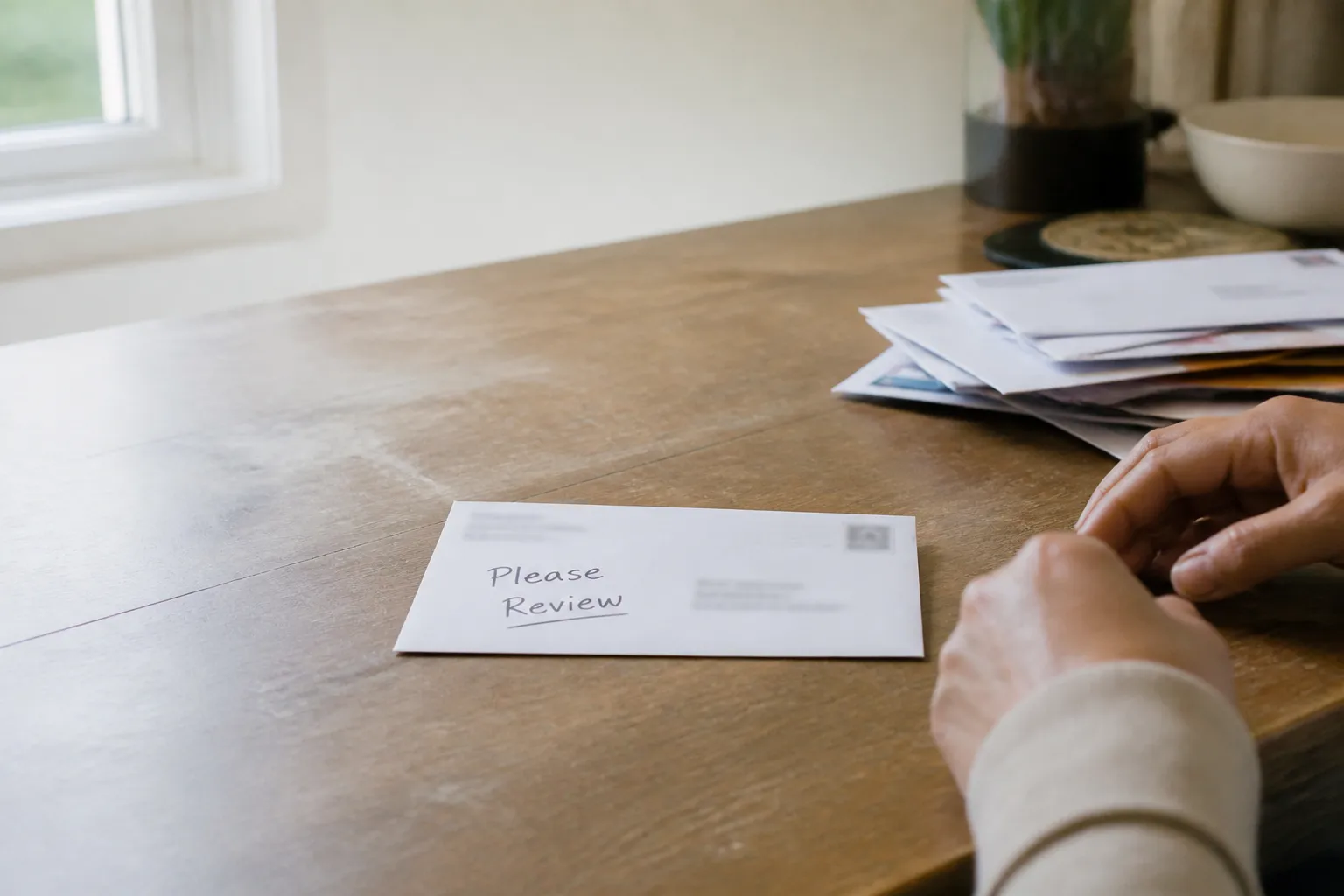
- If the mail is addressed to you but you do not want it, write “Refused,” keep it unopened, and return it.
- If mail for a former resident keeps arriving, contact your local Post Office and keep a simple record of dates and return markings.
- If a letter suggests an account may have been opened using your information, pause before responding and review guidance from the FTC or CFPB.
Why old-address mail is common
A statement for a former tenant or homeowner can feel personal, especially when it names a creditor or shows a payment deadline. But misdirected mail is a routine problem. It can mean a letter reached the wrong mailbox, or that a company still has an old address for someone who moved.
The scale helps put one envelope in context. The Postal Service reported almost 73 million misrouted First-Class letters from March 1 through September 30, 2020, about 0.15% of the First-Class letters processed during that period. A survey cited by MYMOVE found that 55% to 59% of movers regularly received mail for previous residents. Handling undeliverable mail also costs the Postal Service about $1.5 billion a year, according to the same source. These figures describe mail broadly, not bills alone.
So the first question is not whether the bill is real. It is whether it is addressed to you. If the named person is someone else, the envelope does not make you responsible for that person’s account. Do not open it to investigate the balance, account number, or payment date.
Use the envelope to send a clear signal
For mail addressed to a previous resident or an unknown person, write “Not at this address” or “Return to Sender” where postal staff can see it. Avoid covering the addressee, return address, or incorrect address. You do not have to learn where the person moved or write a forwarding address on their behalf. A USPS return-mail guide describes these basic steps and the available ways to hand the item back.
Postal markings such as “Insufficient Address,” “No Such Number,” “Attempted Not Known,” “Moved Left No Address,” “Refused,” and “Unclaimed” explain why delivery failed. They may help the sender understand that the address did not work, but they do not guarantee that the sender will correct its records. If you see one of these markings on a returned envelope, leave it in place.
A bill addressed to you is a different case. If you do not want the mail, the cited guidance says to leave it unopened, mark it “Refused,” and return it. That route is for mail you are refusing, not for a former resident’s bill. The distinction matters when the envelope is headed into a household’s mail-sorting routine: check the name before deciding which marking applies.
Know the legal line before handling someone else’s mail
Federal law, 18 U.S.C. § 1708, addresses buying, receiving, concealing, or unlawfully possessing mail that is not yours. The source material describes a possible fine and a prison term of up to five years. It also says intent matters: the person must know the mail is not theirs. Accidentally opening an envelope is not the same as deliberately keeping or destroying it, but the sources caution that destroying or disposing of mail can be treated as evidence that someone knew it belonged to another person. See the MYMOVE overview of mail that is not yours for its explanation of the federal rule.
State rules can differ. The cited overview gives Texas as an example: it describes mishandling mail from fewer than 10 locations as a misdemeanor and mail from 50 or more locations as a first-degree felony. That example does not establish the rules in other states, and this article is general education, not legal advice. If you have received a legal demand or have a specific concern about what happened to a piece of mail, a licensed attorney can explain how the rules may apply.
There is a practical reason to avoid opening or discarding the envelope, too. Mail can contain checks and personal documents that expose someone to identity theft. Returning the item unopened protects the named recipient’s privacy and gives postal staff a chance to route it appropriately.
When the same bill keeps coming back
If mail for a former resident continues to arrive, notify your local Post Office. The cited guidance says repeated returns may eventually lead the post office to stop delivering mail for former residents to that mailbox after large volumes have been returned. The sources do not specify how many returns trigger that change, so do not treat it as an immediate fix.
A small log can make the pattern easier to explain. Note the date, the return marking you used, and whether the mail was for the same name or sender. You do not need to record private account details from an envelope, and you should not open it to gather information. The point is to be able to describe repeated deliveries to postal staff without taking responsibility for someone else’s account.
The return process has limits. The available guidance does not spell out how to correct a creditor’s or utility’s customer records, what to say to a collector about a former resident, or how to file a change-of-address order for another person. Returning the envelope and notifying the Post Office are the supported steps here; they may not resolve a sender’s outdated records.
Separate an old address from a possible fraud signal
A bill for someone else is not, by itself, proof that your identity was used. But if mail addressed to you refers to an account you do not recognize, or other details suggest someone may have used your information, treat that as a separate issue from ordinary misdelivery. Do not rely on the envelope alone to determine what happened, and avoid making assumptions based only on a familiar company name.
The Federal Trade Commission and Consumer Financial Protection Bureau publish general information for people who suspect identity theft or have questions about debt collection. Their official resources may help you identify appropriate next steps. The sources used for this article do not provide a specific fraud-reporting process for a bill sent to the wrong address, so consult those agencies’ guidance rather than treating a return-to-sender mark as a complete fraud response. For an ordinary former-resident bill, the immediate task remains simple: keep it closed, mark it clearly, and return it through the Postal Service.
Please seek a professional. This article is general information, not financial, tax or insurance advice. Please seek a licensed financial, tax or insurance professional about your own situation.


