 Credit Score Education
 Credit Reporting & Consumer Rights
 Personal Finance Tips
 Budgeting & Money Management
 Identity Theft & Fraud Prevention
 Credit Card Education
 Consumer Financial News
 Cost of Living & Inflation
 Banking & Savings Education
 Consumer Protection & Financial Literacy

When an annual car registration notice lands on the kitchen table, the balance due rarely matches what you paid three or four years ago. Drivers often assume standard inflation drives these increases, expecting state motor vehicle bureaus to follow the same baseline trends tracked across retail goods and grocery bills. Yet vehicle fees operate on a different set of rules.

State lawmakers establish registration amounts by statute rather than tying them directly to monthly price indexes. A general inflation wave certainly influences state budgets, driving up the expense of asphalt, steel, road paint, and municipal highway labor. When maintenance expenses climb, legislators look for ways to keep state road funds solvent without running deficits.
At the same time, shifting revenue models create additional friction. Traditional transportation funding relies heavily on fixed motor fuel taxes assessed per gallon at the pump. Because modern cars travel farther on a single gallon, drivers purchase less fuel over the course of a year, eroding the primary revenue base states use to repair highways and bridges.
To patch these shortfalls, state governments have restructured fee schedules across passenger cars, commercial vehicles, and alternative-fuel models. The result is a patchwork of standard fees, special surcharges, and technology fees that affect annual renewal totals across the country.
How inflation and other pressures shape vehicle fees
Official inflation metrics do not map cleanly to local registration renewals. The Bureau of Labor Statistics tracks consumer prices through the Consumer Price Index to record broad changes in household living costs. While the agency tracks thousands of goods and services, available index summaries do not break out a single public rate for state title and licensing expenses, meaning drivers cannot point to a standard federal number to explain an adjusted line item on their bill.
Instead, motor vehicle costs move under a mix of rising infrastructure materials, capital projects, and specific fiscal priorities set during state legislative sessions. One state might hike registration by ten dollars to fund highway safety patrols, while a neighboring state holds registration level but raises local wheel taxes. The pressure builds from multiple directions rather than a single economic source.
Gas tax mechanics make this gap more pronounced. Unlike a percentage sales tax, gasoline levies are usually set as a flat dollar amount per gallon. When highway resurfacing supplies rise in price, per-gallon revenues do not automatically adjust upward. As higher-efficiency vehicles enter the fleet, each car contributes fewer pennies per mile driven, forcing state budget offices to look for alternative revenue sources on registration renewal forms.
What special fees on electric and hybrid vehicles look like
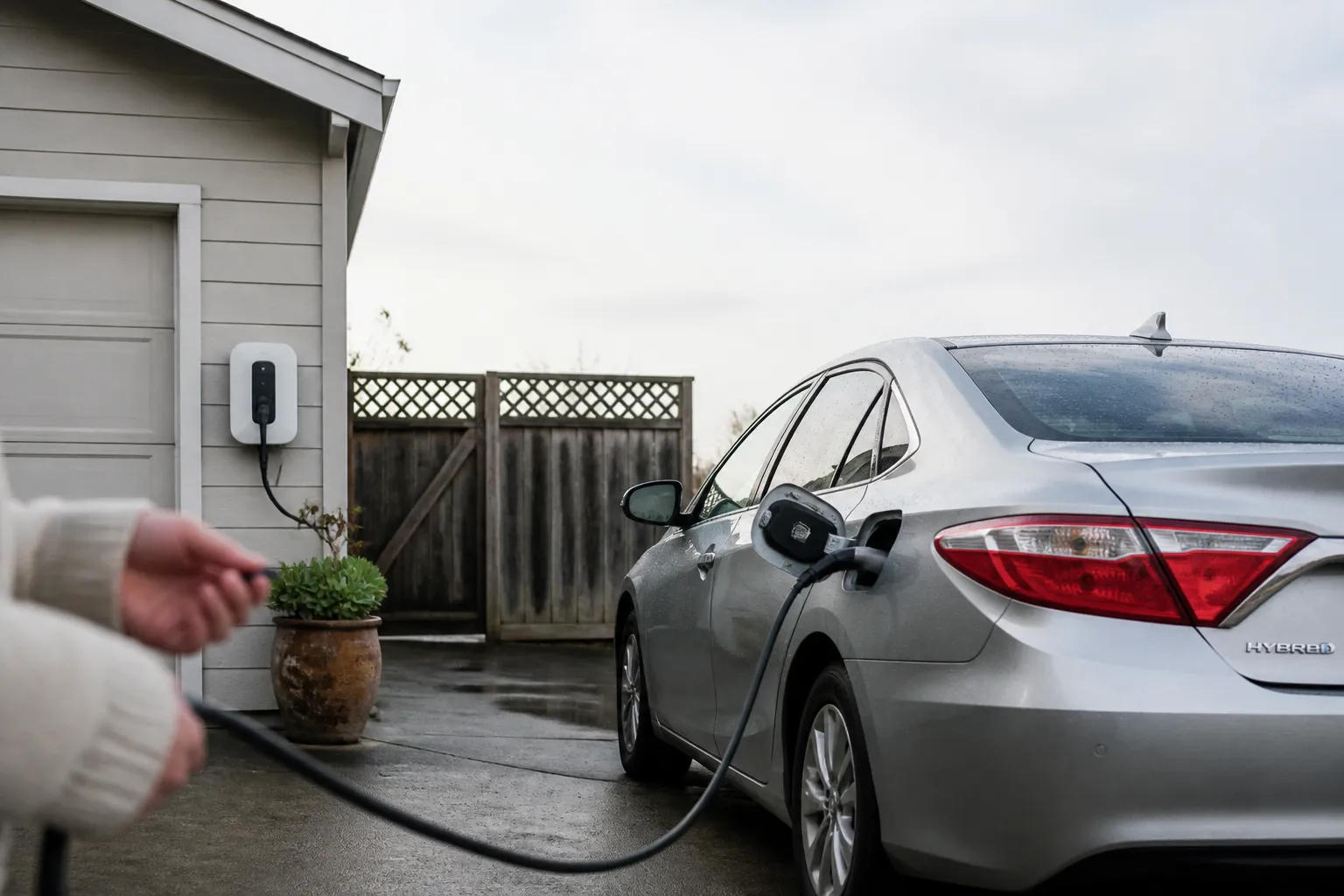
The clearest response to shrinking gas tax receipts is the rapid adoption of supplemental fees on battery-powered and hybrid models. According to findings compiled by the National Conference of State Legislatures, at least 42 states impose a distinct annual registration fee on electric vehicles. Of those states, 35 also assess dedicated fees on plug-in hybrids or conventional non-plug-in hybrids.
These surcharges usually sit on top of regular registration fees, creating noticeable regional differences:
- Electric vehicle fees range from $70 in New Mexico, scheduled to take effect in 2027, and $75 in Minnesota, up to $242 in Indiana and $290 in New Jersey, set for 2028.
- Plug-in hybrid fees span from $35 in New Mexico, beginning in 2027, and $50 in New Hampshire, North Dakota, and Wyoming, up to $150 in Ohio.
- Traditional hybrid fees run between $38 in Utah and roughly $100 across several other states.
A separate research memo by the Kansas Legislative Research Department found that annual EV and hybrid charges span from roughly $30 to $400 across 39 surveyed states. With the exception of Kansas, these figures represent separate add-on amounts that do not include the standard base vehicle registration, which means headline charges often obscure the final amount due.
How fees are calculated and where the money goes
States take different approaches to calculating registration add-ons. Some jurisdictions look purely at vehicle weight. Delaware, Kansas, Michigan, Montana, Nebraska, and Oklahoma use weight tiers to set fees for electric or hybrid models, based on the principle that heavier battery packs produce higher wear on local pavement.
Other states calibrate fees based on fuel consumption or calculated gasoline offsets. Oregon applies a sliding fee to traditional gasoline vehicles based on fuel economy ratings: $20 for models earning 19 miles per gallon or less, $25 for 20 to 39 miles per gallon, and $35 for vehicles rated at 40 miles per gallon or higher. Virginia calculates a highway use fee by charging 85 percent of the motor fuel tax difference between the vehicle's fuel rating and a standard baseline car rated at 23.7 miles per gallon.
Certain states also connect these amounts to ongoing price indexes. Colorado adjusted its electric vehicle fee to $57.19 for the 2024-2025 fiscal year with annual adjustments, alongside a $12 road usage fee in 2025 that increases each year. Hawaii operates a road usage charge of 0.8 cents per mile, capped at $50, which officials tally using annual vehicle inspection odometer readings.
Most revenue collected from these tiered fees flows into state highway trust funds to repair bridges and surface local routes, though exceptions exist. Louisiana shares a portion of its alternative vehicle receipts with local municipalities. These shifts arrive just as broader federal purchase subsidies for electric cars have expired, adding another variable to ownership ledgers.
Digital DMV services and other cost changes
State agencies have also updated their administrative operations over recent budget cycles. Upgrades to online portals and automated renewal kiosks are often described as convenient for vehicle owners, but tech modernizations carry maintenance contracts and vendor expenses.
In industry observations on registration increases, including commentary from Versarien on market trends, agency technology updates are frequently cited as cost drivers passed along to motorists. In some jurisdictions, processing updates have led to one-time administrative adjustments or added portal service fees. Drivers examining their receipts may notice that while their vehicle weight classification remained unchanged, processing or platform charges increased the final renewal cost.
How to check your own state fee schedules
Because state codes vary so widely, reviewing the primary documentation for your vehicle's home jurisdiction is the safest way to prepare for your next renewal.
- Locate the published fee schedule on your state motor vehicle division website and verify how your fuel type is classified.
- Check whether your state calculates fees using a flat rate, curb weight, efficiency rating, or odometer mileage.
- Verify whether listed charges include base registration, or whether special road usage fees are billed separately.
- Identify whether the state incorporates automatic annual inflation adjustments or deferred implementation dates that take effect in future years.
Looking closely at line items helps avoid surprises when renewal forms arrive. For questions regarding specific exemptions or payment disputes, consumers should consult their official state vehicle agency or review consumer protection materials through the Federal Trade Commission or Consumer Financial Protection Bureau.
Limits of the available data
While state research documents supply detailed rates for alternative vehicles, national figures for standard non-hybrid passenger car registration changes remain limited. Published reports do not present a single state-by-state record showing how baseline fees for conventional gasoline sedans have risen alongside historical inflation rates.
State statutes change frequently through legislative sessions, and fee codes vary across municipal jurisdictions and county tax offices. General industry commentary can highlight administrative trends, but vehicle owners should always verify current figures against official state administrative schedules before planning household budgets.